

Pressure sensor is a device that can convert the pressure signals of media such as gases and liquids into measurable electrical signals. It is like a sharp "pressure perceiver", capable of accurately capturing subtle changes in pressure. With its precise pressure-sensing ability, it has become an indispensable and important component in modern society for achieving automated control and accurate measurement, providing strong support for the development of various industries.
-

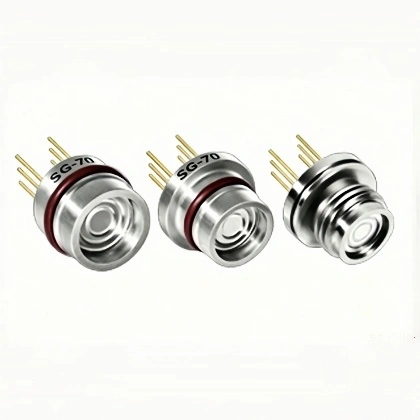
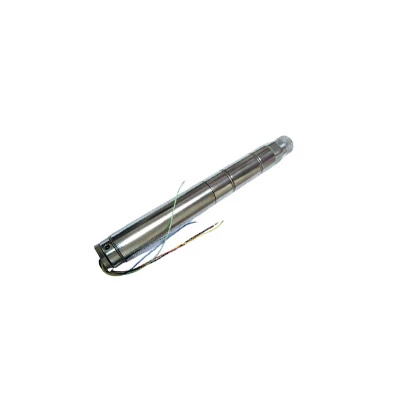
High Accuracy Quartz Crystal Pressure Transducers
1. High pressure/high temperature ranges
2. 0.01% FS repeatability
3. 0.02% FS accuracy
4. <100Pa resolution
5. Rapid response to pressure temperature transientsAdd to Inquiry -
-
-
-
-
-
-
-
-
-
-




Why choose us
Professional Technical
Our engineers and technicians work with strict processes and provide customized technical solutions that meet the needs of demanding applications.
Stable Production Lines
We operate organized production lines supported by clear workflow control, ensuring consistent output and steady product performance.
Advanced Core Equipment
CNC machining tools, precision calibration systems, vibration test units and environmental chambers allow us to maintain high accuracy and reliable quality.
Fast and Responsive Service
Our sales team replies within 24 hours and supports customers throughout the whole project cycle.
High Accuracy Quartz Crystal Pressure Transducers
A quartz pressure transducer is a highly precise sensor that utilizes the piezoelectric properties of quartz crystals to convert mechanical pressure into an electrical signal. Known for their exceptional accuracy, stability, and resistance to environmental stress, these transducers are widely used in industrial, aerospace, automotive, and scientific applications. They are primarily categorized into three main types—static, dynamic, and differential—each engineered to meet specific measurement requirements based on pressure behavior and operational conditions.
|
Characteristic |
Parameter |
|
Voltage requirements |
4-5.5VDC |
|
Current |
2-3mA typical, (depend on load conditons) |
|
Warm-up time |
≤1 sec |
|
Supply Voltage sensitivity |
Minimal within specified voltage |
|
Signal Outputs |
DC coupled advanced CMOS, |
|
|
2.8(±0.25)V p-p rectangular wave |
|
|
25% minimum duty cycle |
|
|
50 ohm output impedance |
|
Nominal pressure frequency |
10 kHz to 90 kHz |
|
Nominal temperature frequency |
10 kHz to 90 kHz |
|
Electrical connections |
Pressure, temperature, reference, power, ground |
|
Proof pressure |
120% full scale |
|
Gravity/ Orientation effect |
Negligible |
|
Acceleration sensitivity (any axis) |
<0.02 psi/g |
|
Mechanical shock |
500 g, 2 ms half-sine |
Features of High Accuracy Quartz Crystal Pressure Transducers
01/
Exceptional Temperature Resistance
One of the standout advantages of quartz pressure transducers is their ability to function reliably across an extremely wide temperature range—typically from -50°C to over 500°C. This thermal stability stems from the inherent properties of quartz crystals, which exhibit minimal thermal drift and maintain structural integrity under intense heat or cold.
02/
Robust Sealing for Harsh Environments
Effective sealing is critical to ensure long-term reliability and prevent contamination from process media. Quartz pressure transducers are typically equipped with advanced sealing technologies, including welded metal seals, hermetic glass-to-metal feedthroughs, or high-performance elastomers like Viton® or Kalrez®.
03/
Superior Durability and Extended Lifespan
Quartz pressure transducers are renowned for their longevity, often exceeding 10 years of continuous operation with minimal degradation in performance. The quartz crystal itself is highly resistant to fatigue, hysteresis, and creep, even under repeated pressure cycling and mechanical stress.
04/
Versatile Output Signal Options
To ensure seamless integration into diverse control and data acquisition systems, quartz pressure transducers are available with multiple output configurations, including analog signals (e.g., 0–5 V, 0–10 V, 4–20 mA) and digital interfaces (e.g., RS-485, CAN bus, or Modbus protocols).
Advantages of High Accuracy Quartz Crystal Pressure Transducers
High Accuracy and Stability: Quartz sensors offer superior repeatability and low hysteresis, maintaining calibration over extended periods without frequent adjustments.
Resistance to Harsh Media: Compatible with aggressive chemicals and high-purity fluids due to inert quartz material and robust housing options (e.g., Hastelloy or titanium).
Low Maintenance Requirements: Minimal need for recalibration or part replacement reduces operational costs and increases system uptime.
Immunity to Electromagnetic Interference (EMI): Quartz-based sensing is inherently less susceptible to EMI, making it ideal for use in electrically noisy environments.
Compact and Lightweight Design: Enables integration into space-constrained or portable systems without sacrificing performance.

Types of High Accuracy Quartz Crystal Pressure Transducers
Static Pressure Transducers
Designed for measuring steady or constant pressure in gases and fluids, static quartz pressure transducers deliver long-term stability with minimal drift. These sensors are ideal for applications requiring continuous monitoring without frequent recalibration.
Dynamic Pressure Transducers
Engineered to capture rapid pressure fluctuations, dynamic quartz transducers excel in high-speed measurement environments. Their fast response time allows for accurate capture of transient pressure events, making them essential in performance testing and diagnostics.
Differential Pressure Transducers
These transducers measure the pressure difference between two points in a system, providing critical insights into flow rates, filter clogging, and liquid levels. Leveraging the high sensitivity of quartz, they can detect minute pressure variations with exceptional precision.
Applications of High Accuracy Quartz Crystal Pressure Transducers
Industrial Automation
Quartz crystal pressure sensors are widely used in petrochemical, steel smelting, and other industries where high-temperature and high-pressure conditions prevail. For instance, they monitor pressure in oil and gas pipelines, withstanding up to 200 MPa and extreme temperatures, ensuring stable operation and preventing accidents.
Aerospace
Quartz sensors monitor critical parameters such as altitude, airspeed, and engine pressure, ensuring flight safety. For example, they measure fuel pressure in rocket engines, withstanding extreme vibrations and temperature gradients.
Automotive Electronics
Quartz pressure sensors regulate intake manifold pressure, fuel injection timing, and exhaust gas recirculation (EGR), improving combustion efficiency and reducing emissions.
Environmental Monitoring
Functionalized quartz sensors detect trace gases like CO₂ and VOCs, with detection limits down to ppb (parts per billion) levels, supporting pollution control policies.
Medical and Healthcare
Flexible quartz film sensors measure physiological signals such as heart rate and respiratory rate in wearable devices, offering high accuracy without direct skin contact.
Scientific Research
Quartz sensors measure stress-strain relationships in materials under high-pressure conditions, aiding in the development of advanced composites.
Consumer Electronics
Quartz gyroscopes enable precise motion tracking (e.g., screen rotation, fitness tracking), with angular velocity errors below 0.01°/hour.
Monitoring Pressure in Real Time of High Accuracy Quartz Crystal Pressure Transducers
Signal Output
Quartz transducers typically provide analog (e.g., 4–20 mA, 0–5 V) or digital (e.g., RS-485, CANbus, frequency output) signals depending on the model.
Signal Conditioning
Use compatible amplifiers or signal conditioners to ensure noise-free transmission, especially over long cable runs.
Real-Time Display
Connect the output to a data acquisition system (DAQ), PLC, or digital readout for continuous monitoring.
Response Time
Quartz sensors offer fast response times (microseconds), making them ideal for dynamic pressure events like combustion or hydraulic shocks.
Installation and Calibration
Mounting
Secure the transducer using manufacturer-recommended fittings to avoid strain on the sensing element.
Sealing
Use appropriate O-rings or thread sealants compatible with the process media (gas or liquid) to prevent leaks.
Calibration
Most quartz transducers are factory-calibrated with traceable documentation. However, field verification using a known reference standard (e.g., deadweight tester) is recommended before initial use.
Zero Adjustment
Perform a zero-pressure calibration in a controlled environment to compensate for minor installation effects or drift.
Maintenanc
Visual Inspection
Check for physical damage, corrosion, or leaks around the diaphragm and connections.
01
Seal Integrity
Replace worn seals or gaskets to prevent contamination of the sensing chamber.
02
Performance Verification
Compare readings against a calibrated reference every 6–12 months or after exposure to extreme conditions.
03
Recalibration
Return the unit to the manufacturer or an accredited lab for recalibration if deviations exceed ±0.25% of full scale.
04
Cleaning
Use only non-abrasive, manufacturer-approved cleaners; never submerge the electronics.
05
As one of the most professional pressure sensor manufacturers and suppliers in China, we're featured by quality products and low price. We warmly welcome you to wholesale high-grade pressure sensor for sale here from our factory. Contact us for more details.
