

The mini piston hydraulic pump is a hydraulic power device with a small size and compact structure. It centers on the reciprocating motion of the piston, which can efficiently convert mechanical energy into hydraulic energy, providing a stable pressure source for small hydraulic systems. Despite its mini size, it features strong power output, high precision and low energy consumption, playing an irreplaceable role in various scenarios with strict restrictions on space and weight.


Why choose us
Professional Technical
Our engineers and technicians work with strict processes and provide customized technical solutions that meet the needs of demanding applications.
Stable Production Lines
We operate organized production lines supported by clear workflow control, ensuring consistent output and steady product performance.
Advanced Core Equipment
CNC machining tools, precision calibration systems, vibration test units and environmental chambers allow us to maintain high accuracy and reliable quality.
Fast and Responsive Service
Our sales team replies within 24 hours and supports customers throughout the whole project cycle.
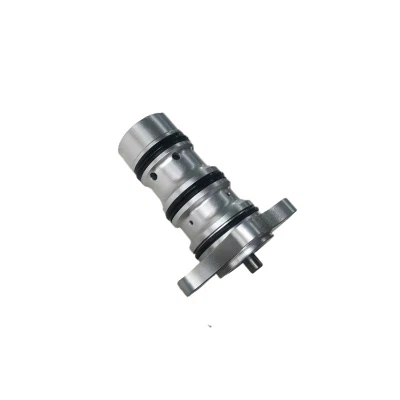
Cartridge Piston Pump
A reciprocating piston pump typically refers to a pump type in which the piston reciprocates within a sealed, hollow cylindrical pump chamber. Its core structure consists of a cylindrical pump chamber and a reciprocating piston, achieving fluid transport through volume changes.
|
Displacement (cc) |
0.03, 0.06, 0.09, 0.13 |
0.25, 0.5 |
1, 1.5/1.7 |
3/5/7 |
|||||
|
Cartridge (Bi-di…) |
● |
● |
● |
● |
● |
● |
● |
● |
● |
|
Shaft side port (Bi-di…) |
|
|
|
|
|
|
|
● |
● |
|
Weight (kg) |
0.11 |
0.23 |
0.66 |
1.73 |
|||||
|
Peak pressure (Mpa) |
35 |
35 |
35 |
35 |
35 |
35 |
35 |
35 |
35 |
|
Rated pressure (Mpa) |
30 |
30 |
30 |
30 |
30 |
30 |
30 |
30 |
30 |
|
Max speed for standard pump (rpm) |
5000 |
5000 |
5000 |
4000 |
4000 |
4000 |
3500 |
3000 |
2500 |
|
Max. speed for high speed version (RPM) |
15000 |
15000 |
10000 |
12000 |
10000 |
12000 |
10000 |
10000/6000 |
5000 |
|
High speed need charge pressure,1 bar is basically enough for most conditions. Higher speed achievable, pls contact us |
|||||||||
|
Continuous min speed (rpm) |
300 |
300 |
300 |
300 |
300 |
300 |
300 |
300 |
|
|
Keeping 21Mpa speed (rpm) |
400 |
200 |
100 |
100 |
50 |
50 |
50 |
50 |
|
|
This speed is for reference for EHA usage |
|||||||||
|
Oil temperature (℃) |
-40~+100 ℃ |
||||||||
|
Recommended oil |
DTE22~26 |
||||||||
|
Contamination |
ISO4406 20/17/14(NAS8) |
ISO4406 21/18/15(NAS 9) |
|||||||
|
Case pressure |
Depends on shaft seal option |
||||||||
Features of Cartridge Piston Pump
High-Pressure Delivery Capacity
The reciprocating motion of the piston directly compresses the fluid, generating high pressure (up to hundreds of megapascals), suitable for high-lift applications (such as oilfield water injection and hydraulic transmission).
Self-Priming Performance
The local vacuum created during the suction phase automatically primes the fluid, eliminating the need for an additional priming device, making it suitable for pumping gas-containing or viscous liquids.
Flow Rate Stability
Flow rate is directly related to the piston's speed and is less affected by pressure fluctuations, making it suitable for applications requiring precise control (such as pharmaceuticals and chemical metering).
Media Adaptability
It can transport high-viscosity liquids (such as tar and slurry), particulate media (such as cutting fluid and mortar), and corrosive liquids (requires stainless steel construction).
Structural Limitations
The flow rate is uneven (pulsating), requiring a buffer device (such as an air chamber) to smooth the output. High noise and vibration occur during high-speed operation, placing high demands on the mechanical seal.
Type of Cartridge Piston Pump
Electric Cylindrical Piston Pump
This pump converts rotary motion into reciprocating linear motion of a piston by using an electric motor to drive a crank-connecting rod mechanism or cam mechanism.
Pneumatic Cylindrical Piston Pump
This pump uses compressed air to drive a cylinder, which in turn drives the piston in the pump chamber to transfer fluid.
Manual Cylindrical Piston Pump
This pump is manually operated using a handle or lever, relying on manual labor for suction and discharge. It has a simple structure and low cost, but its flow rate and pressure are limited by human effort.

Applications of Cartridge Piston Pump
Industrial Manufacturing
Provides high-pressure hydraulic oil for CNC machine tools, injection molding machines, and die-casting machines, driving mechanical movements.
Energy and Mining
Extracts crude oil from deep wells using a combination of pumping unit and piston pump (nodding donkey pump). Drains accumulated water from mines, tolerates muddy wastewater, and avoids impeller wear.
Agricultural Irrigation
Irrigates mountainous and hilly areas or extracts deep groundwater (centrifugal pumps are insufficient for wells deeper than 10 meters).
Medical and Civil Use
Injector pumps (miniature piston pumps) precisely control infusion rates (error less than 0.1 mL/h). Reverse osmosis (RO) water purifiers use small piston pumps to pressurize tap water and propel it through the RO membrane for filtration.
Components of Cartridge Piston Pump
Piston
Typically made of metal (such as stainless steel) or wear-resistant materials, with high-precision surface machining to ensure a tight seal.
Sealing Device
Employs sealing rings, stuffing boxes, or mechanical seals to prevent leakage of high-pressure fluids.
Inlet/Outlet Valves
One-way valves (such as check valves) control the unidirectional flow of fluid, preventing backflow.
Working Principle of Cartridge Piston Pump
Suction Phase
As the piston moves outward (upward), the pump chamber volume increases, the internal pressure decreases, and a partial vacuum is created. External fluid, propelled by atmospheric pressure or external force, enters the pump chamber through the suction valve.
Discharge Phase
As the piston moves inward (downward), the pump chamber volume decreases, the fluid is compressed, and the pressure increases.When the pressure exceeds the outlet pressure, the discharge valve opens, and the fluid is forced into the outlet pipe.
Circulation Process
The continuous reciprocating motion of the piston causes the pump chamber volume to change periodically, achieving continuous fluid intake and discharge.
As one of the most professional mini hydraulic piston pump manufacturers and suppliers in China, we're featured by quality products and low price. We warmly welcome you to wholesale high-grade mini hydraulic piston pump for sale here from our factory. Contact us for more details.
IMP Piston Pump