
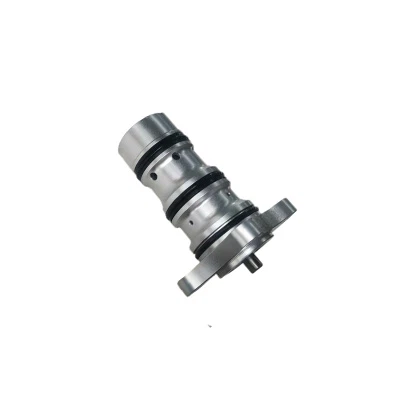
Cartridge Piston Pump
2. Reliable performance and compact structure.
3. Customizable for performance, interface, displacement.
Send Inquiry
Product Details
The cartridge pump is specifically engineered for compact and highly integrated hydraulic systems, catering to the growing demand for space-saving and efficient equipment in various industrial applications. Unlike traditional pumps that require separate installation space and complex pipeline connections, this cartridge pump is designed with integration as the core, enabling it to seamlessly fit into dense system layouts while maintaining excellent operational performance.
Its patented structural design is a key highlight that significantly enhances the pump's speed capability and overall operational stability. The innovative patent design optimizes the internal flow channel structure and improves the coordination between moving components, effectively reducing energy loss during high-speed operation and allowing the pump to operate stably at higher rotational speeds. This not only boosts the pump's working efficiency but also extends its service life by minimizing wear and tear caused by high-speed friction.
As illustrated in the typical system configuration below, the cartridge pump can be fully integrated with supporting components-including control valves, precision filters, and even the oil tank-all assembled on a single manifold block. This integrated design eliminates the need for redundant pipeline connections, simplifies the overall system structure, and achieves an extremely compact layout. Compared with conventional split-type systems, the integrated system not only saves valuable installation space but also reduces potential leakage points, enhances system reliability, and lowers maintenance costs in the long run.
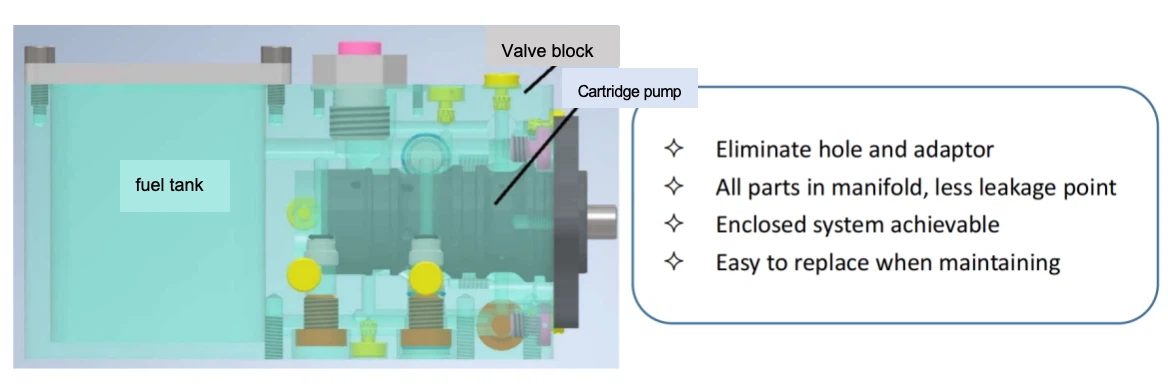
Key Features & Advantages of Cartridge Piston Pump
1. Compact Size and Light Weight: Compared with traditional hydraulic plunger pumps, it features a compact structure, occupying extremely small installation space, which is convenient for integration into small equipment, precision instruments or space-constrained scenarios (such as small construction machinery, micro hydraulic systems). At the same time, it reduces the overall equipment weight and improves equipment mobility.
2. High Efficiency and Energy Saving: Adopting an optimized plunger structure design, it has high volumetric efficiency and low hydraulic energy loss. While outputting stable pressure and flow, it can effectively reduce energy consumption, adapting to the energy-saving needs of small equipment.
3. Stable Pressure Output and High Precision: It has excellent pressure control capability, with stable output pressure and small fluctuation. It can meet the strict requirements for pressure precision of precision hydraulic systems (such as small automatic equipment, micro actuators) and ensure the stability of equipment operation.
4. Compact Structure and Strong Integration: It can be flexibly integrated with small hydraulic components such as valves and filters, without the need for complex pipeline connections. It simplifies the overall hydraulic system layout, reduces the risk of system leakage, and is convenient for installation and maintenance.
5. Wide Adaptability and Low Noise: Despite its small size, it has reliable performance and can be adapted to a variety of small hydraulic scenarios. Moreover, it has small vibration and low noise during operation, making it suitable for environments with requirements on operating noise (such as laboratory equipment, small civil equipment).
6. Long Service Life and Convenient Maintenance: The core components are made of wear-resistant and corrosion-resistant materials, with a simple structure and easy disassembly. Daily maintenance does not require complex tools, which can effectively reduce maintenance costs and extend the overall service life of the equipment.
Typical Applications of Cartridge Piston Pump
1. Aerospace Field
Adapting to the strict requirements of lightweight and high reliability for aerospace equipment, they are widely used in hydraulic control systems. On civil and military aircraft, they are integrated into the landing gear, cabin door and flight control surface control systems to provide stable hydraulic power, reduce system weight and adapt to extreme high-altitude working conditions; on small satellites and UAVs, they serve as the core power source to provide precise support for attitude adjustment and load control, reduce energy consumption, extend endurance, and can also be used in aerospace component test benches and ground simulation test equipment.
2. Scientific Research Field
Adapting to the needs of miniaturization and precision of scientific research equipment, they are ideal hydraulic components. In precision experimental devices, they accurately control fluid pressure and flow to ensure the accuracy of experimental data; in simulation equipment in fields such as materials and fluid mechanics, they assist in simulating hydraulic environments; in laboratory instruments, they are used for reagent delivery, etc., with low noise, no leakage and space saving, and also provide hardware support for hydraulic-related research projects in universities.
3. Military Field
Meeting the requirements of high reliability and strong environmental adaptability for military equipment, they are applied to various military equipment. In small equipment such as portable reconnaissance and rescue robots, they provide stable power, adapting to miniaturized design and complex field environments; on military vehicles, they are integrated into auxiliary hydraulic systems to ensure operational safety, with resistance to high and low temperatures and corrosion; in small weapon accessories, they accurately control power output, and low noise improves concealment.
4. High-Speed Railway Field
They are mainly applied to the auxiliary hydraulic systems of high-speed railways to ensure operational safety and convenience. In the carriage auxiliary system, they control the hydraulic drive of carriage doors, seats and air conditioners, which is stable, efficient and space-saving; in the braking system, they assist in improving response speed and stability, reducing maintenance costs; in maintenance equipment, they are integrated into portable tools for easy on-site operation, and can also be used for hydraulic system detection, while assisting in adjusting shock absorption devices to improve operational stability.
Specifications of Cartridge Piston Pump
|
Displacement (cc) |
0.03, 0.06, 0.09, 0.13 |
0.25, 0.5 |
1, 1.5/1.7 |
3/5/7 |
|||||
|
Cartridge (Bi-di…) |
● |
● |
● |
● |
● |
● |
● |
● |
● |
|
Shaft side port (Bi-di…) |
● |
● |
|||||||
|
Weight (kg) |
0.11 |
0.23 |
0.66 |
1.73 |
|||||
|
Peak pressure (Mpa) |
35 |
35 |
35 |
35 |
35 |
35 |
35 |
35 |
35 |
|
Rated pressure (Mpa) |
30 |
30 |
30 |
30 |
30 |
30 |
30 |
30 |
30 |
|
Max speed for standard pump (rpm) |
5000 |
5000 |
5000 |
4000 |
4000 |
4000 |
3500 |
3000 |
2500 |
|
Max. speed for high speed version (RPM) |
15000 |
15000 |
10000 |
12000 |
10000 |
12000 |
10000 |
10000/6000 |
5000 |
|
High speed need charge pressure,1 bar is basically enough for most conditions. Higher speed achievable, pls contact us |
|||||||||
|
Continuous min speed (rpm) |
300 |
300 |
300 |
300 |
300 |
300 |
300 |
300 |
|
|
Keeping 21Mpa speed (rpm) |
400 |
200 |
100 |
100 |
50 |
50 |
50 |
50 |
|
|
This speed is for reference for EHA usage |
|||||||||
|
Oil temperature (℃) |
-40~+100 ℃ |
||||||||
|
Recommended oil |
DTE22~26 |
||||||||
|
Contamination |
ISO4406 20/17/14(NAS8) |
ISO4406 21/18/15(NAS 9) |
|||||||
|
Case pressure |
Depends on shaft seal option |
||||||||
Installation
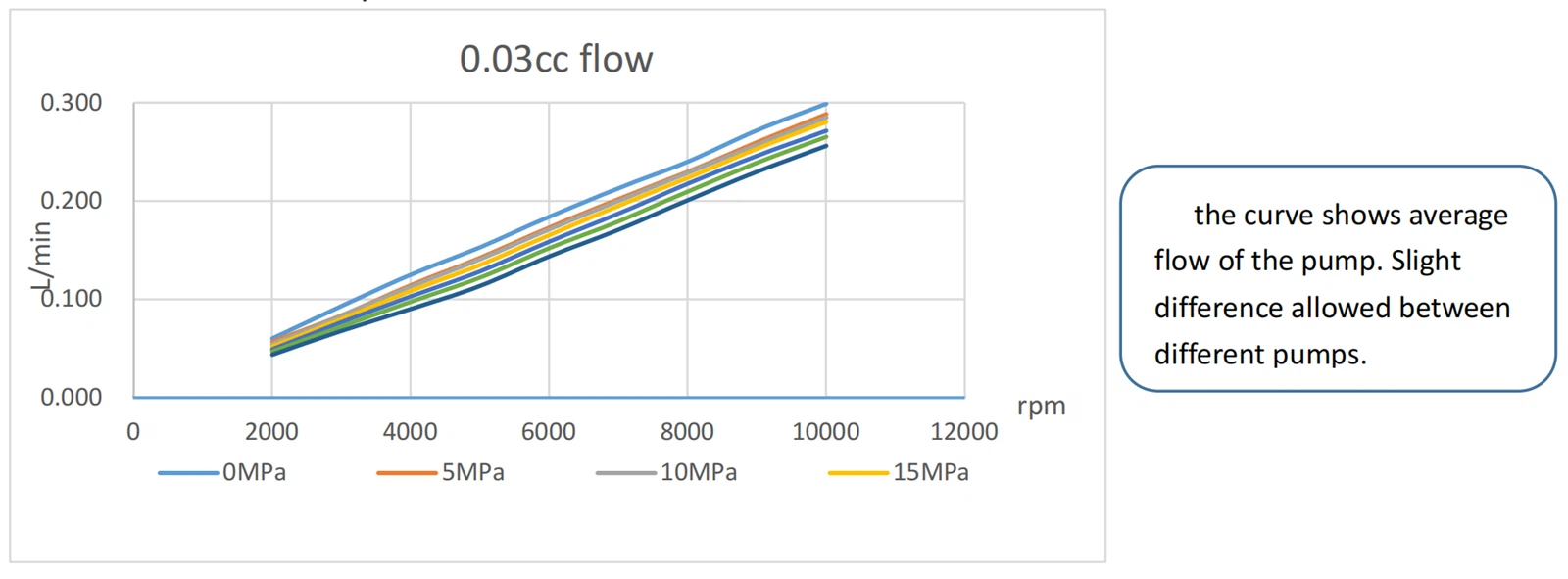
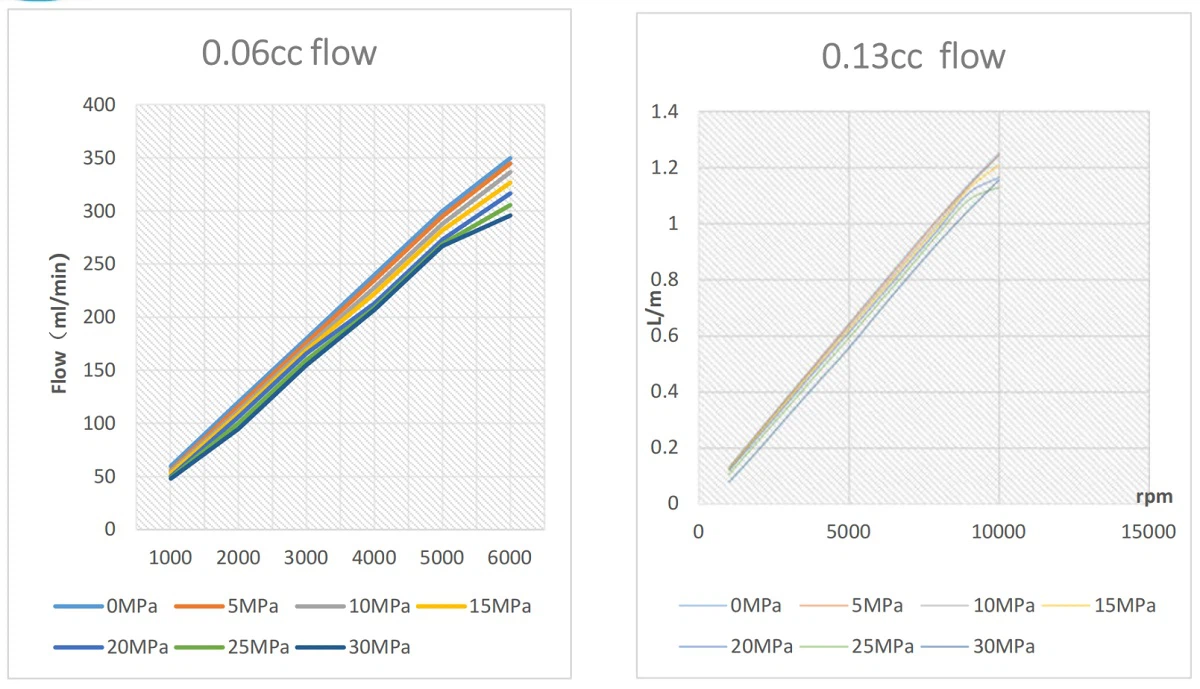
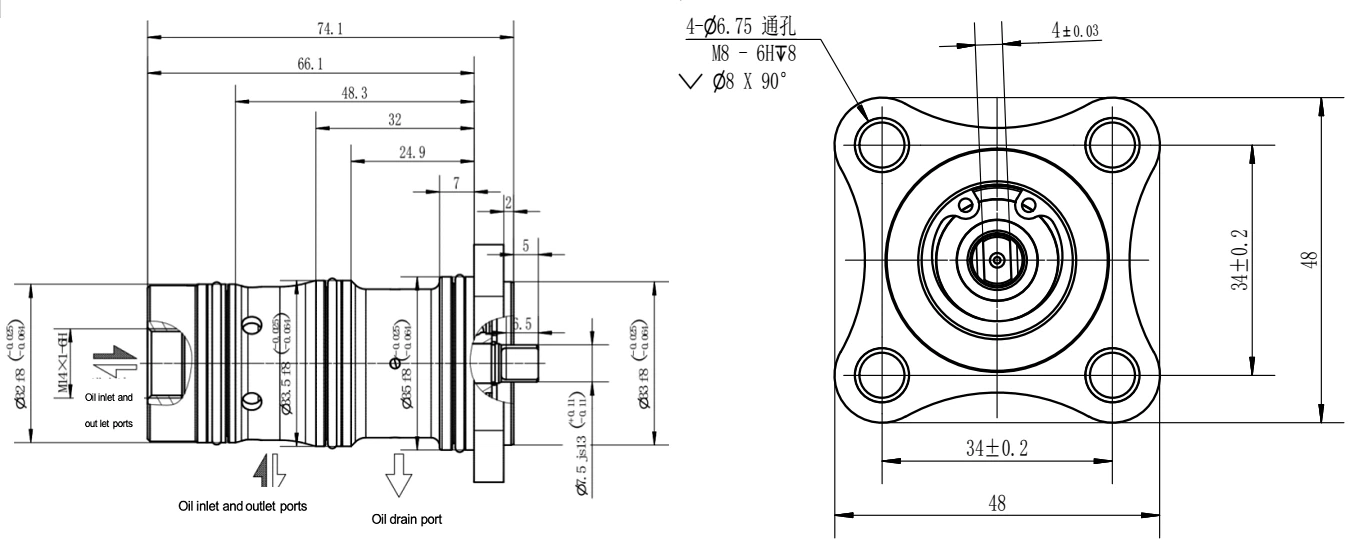
1Cartridge piston pump 0.03cc/0.06cc/0.13/0.16cc(Bi-directional)
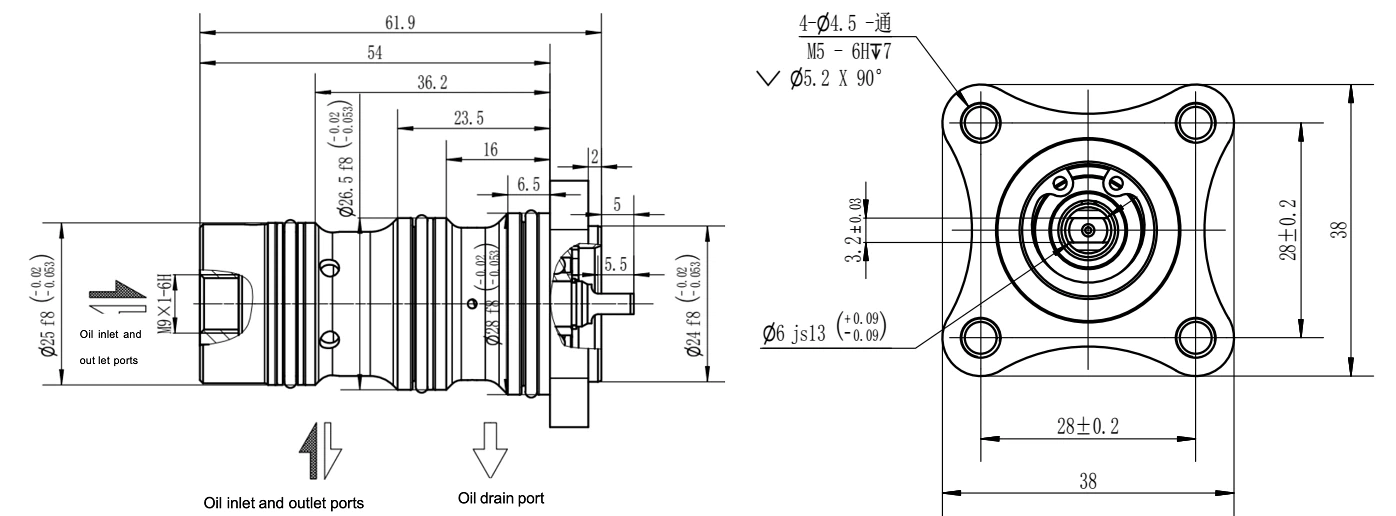
Pump cavity:
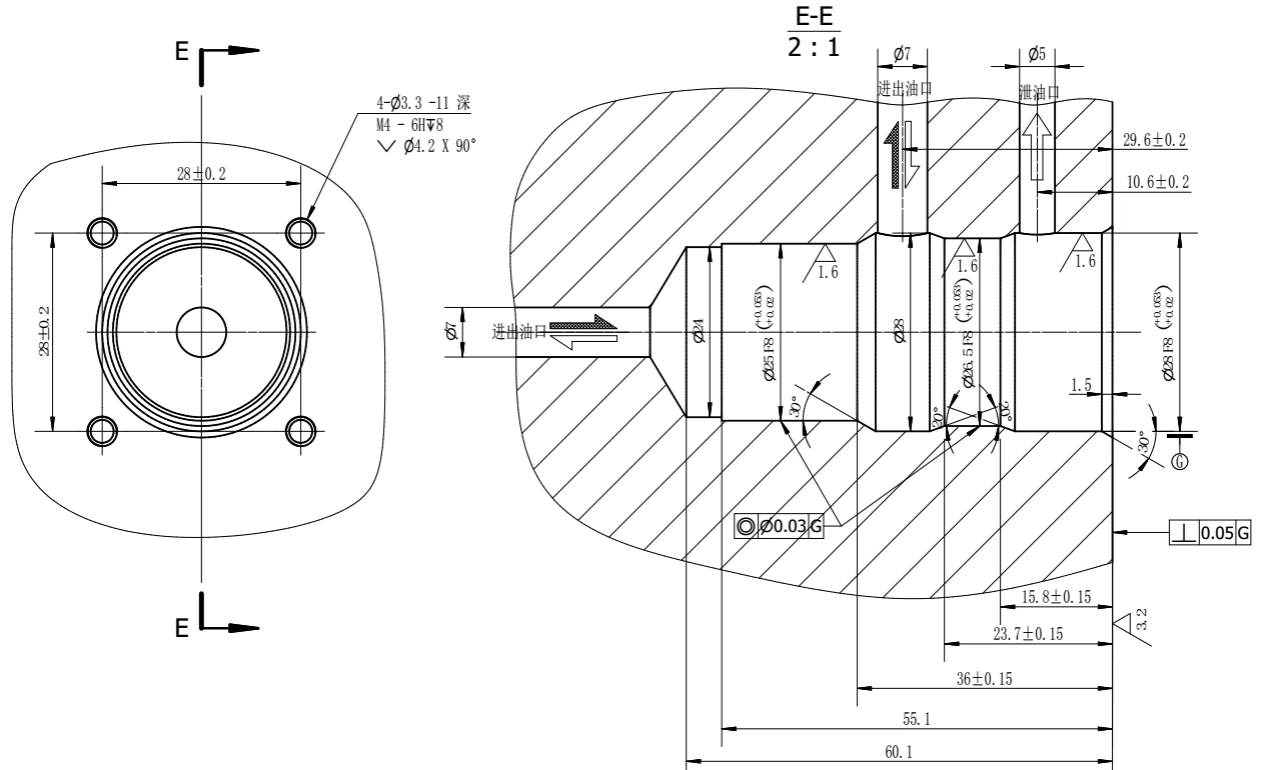
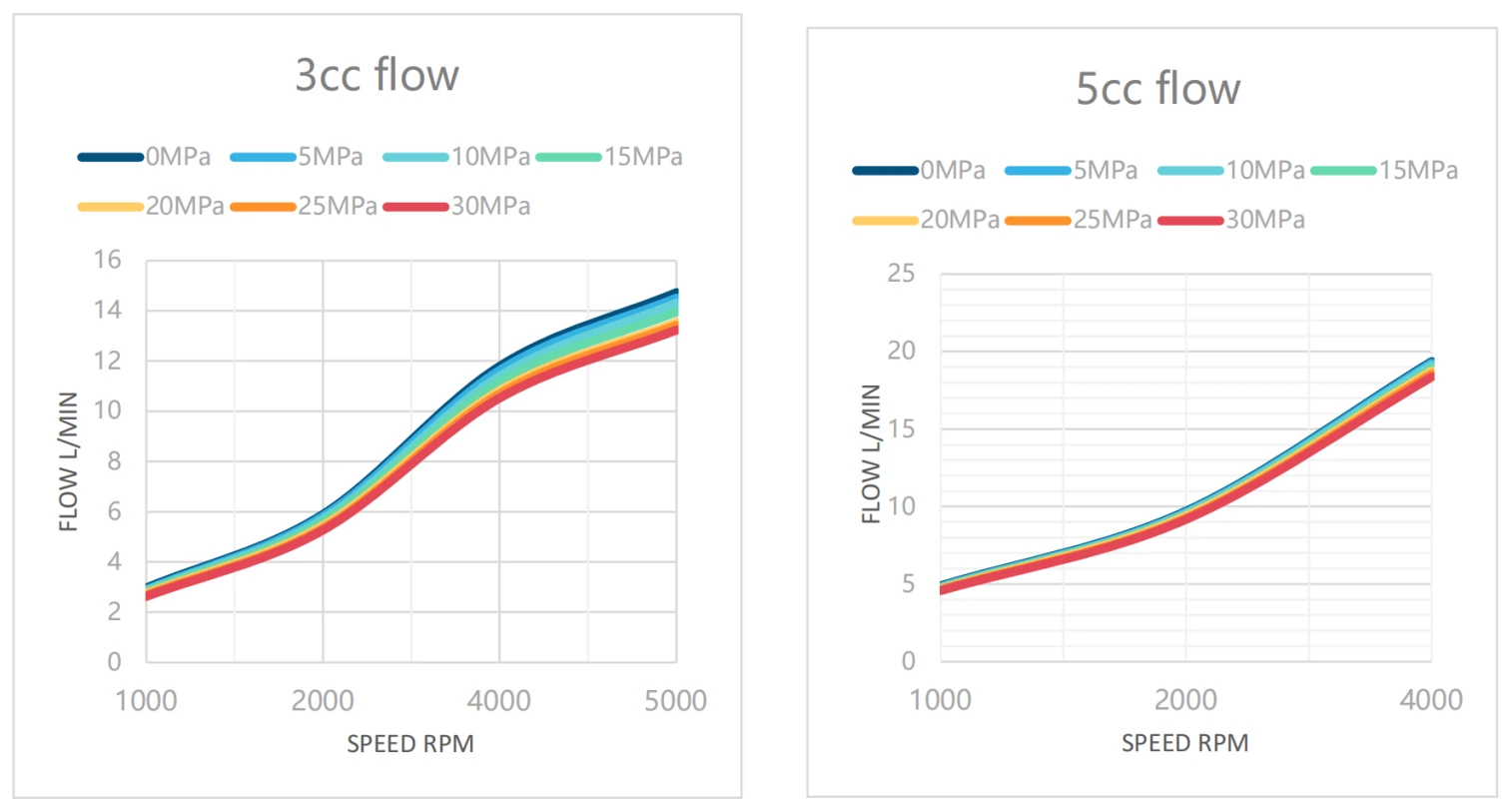
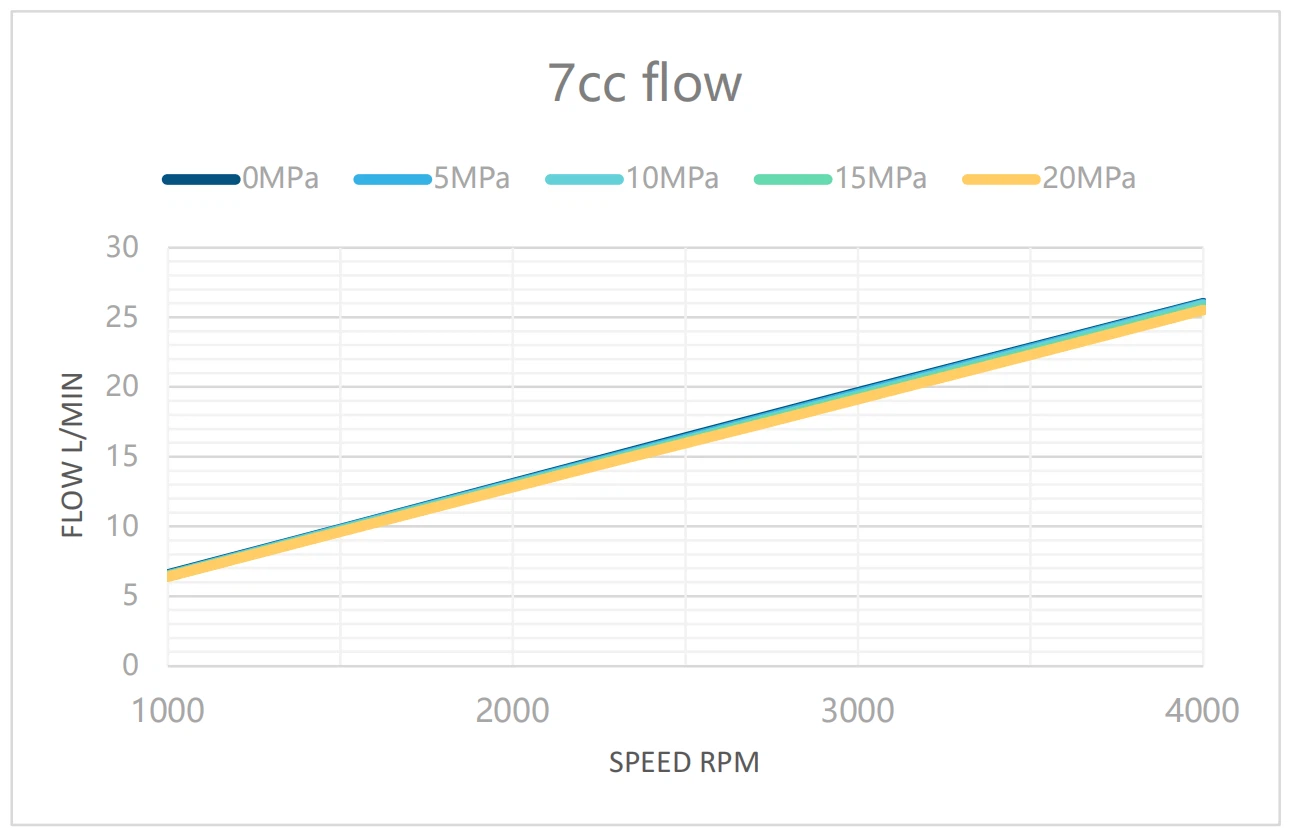
Flow curve:(Oil viscosity 46 cSt)
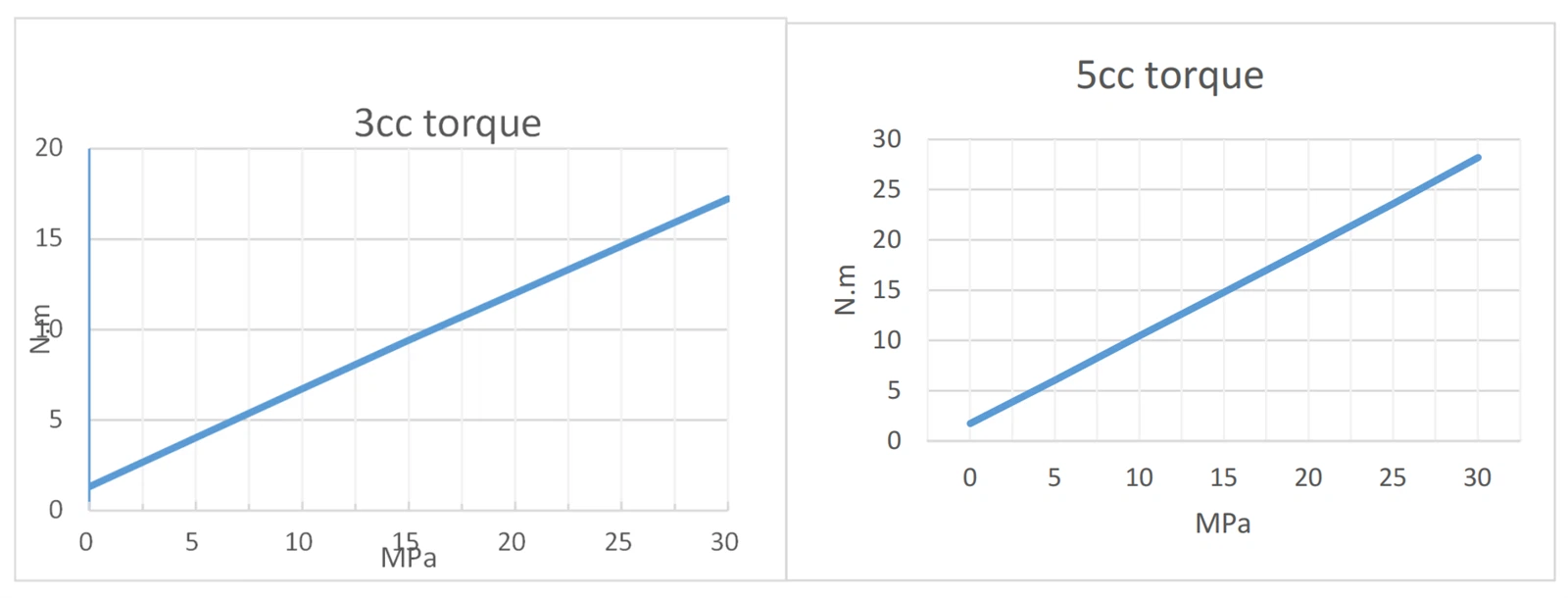
Pressure VS torque curve
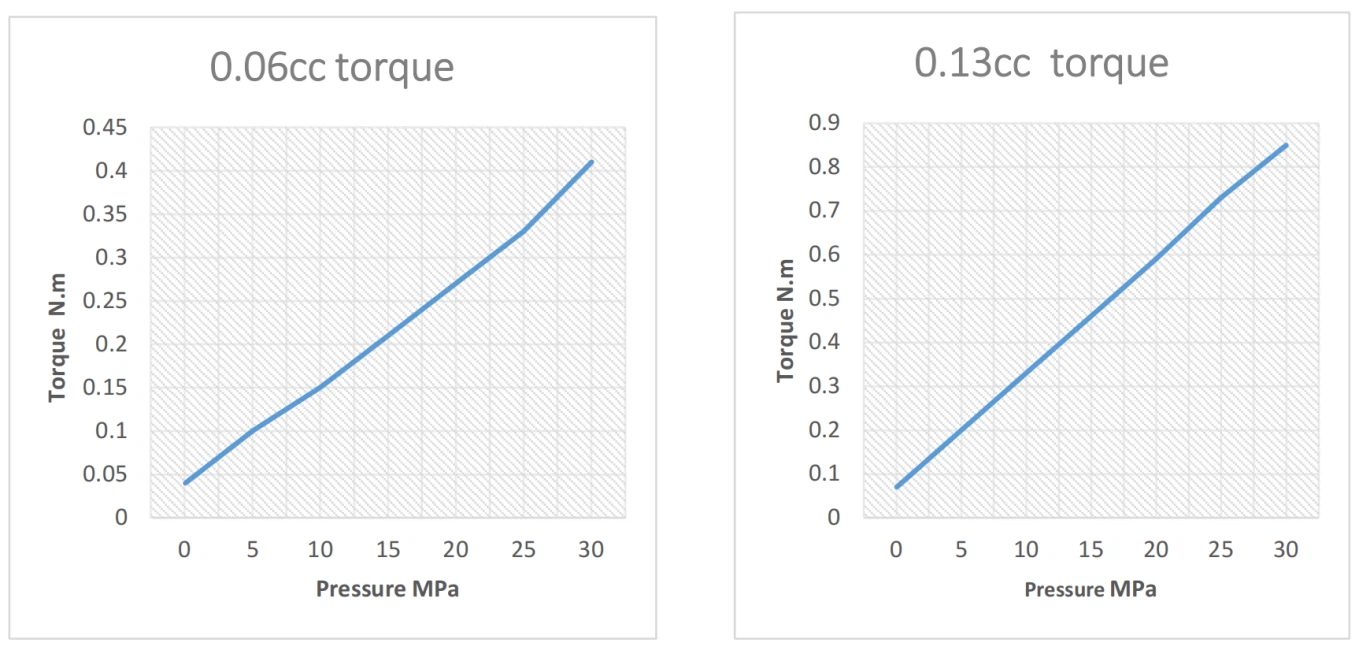
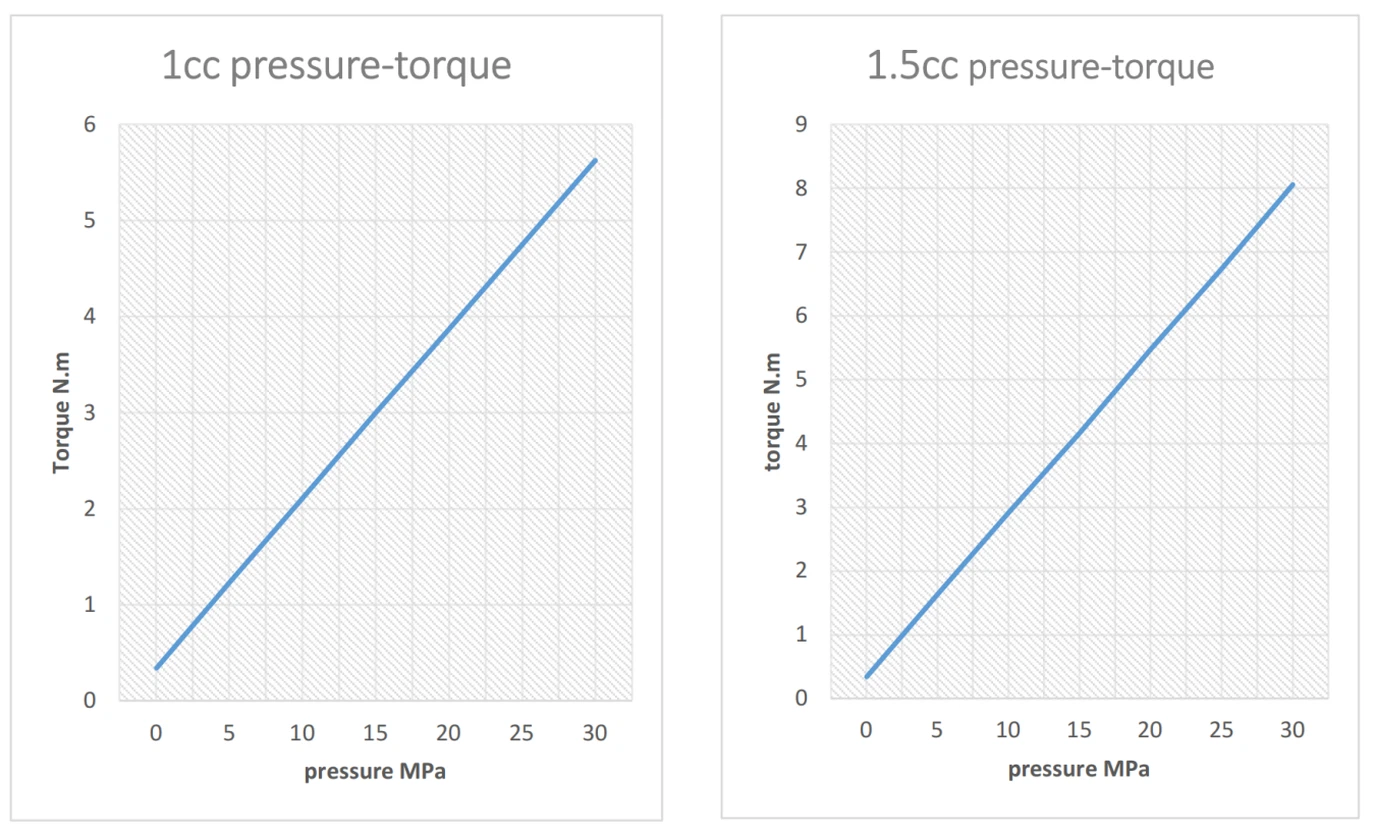
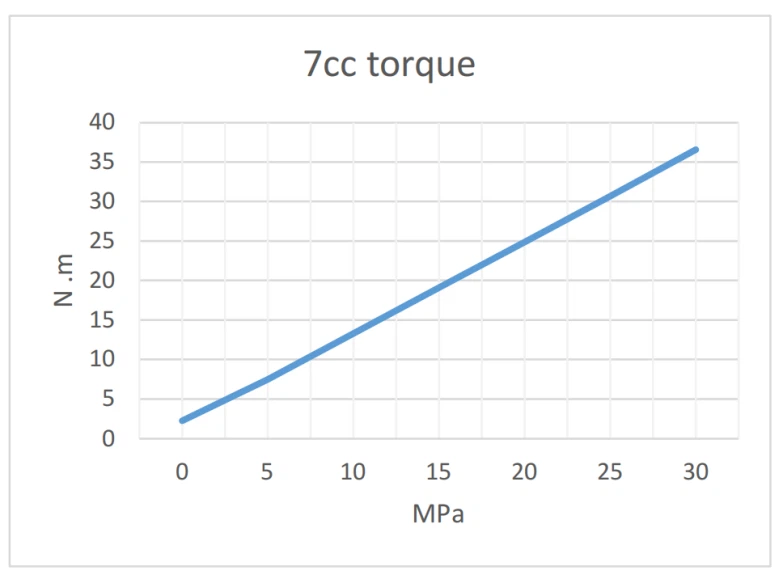
Curve for reference only. Different conditions will lead to different torque and flow
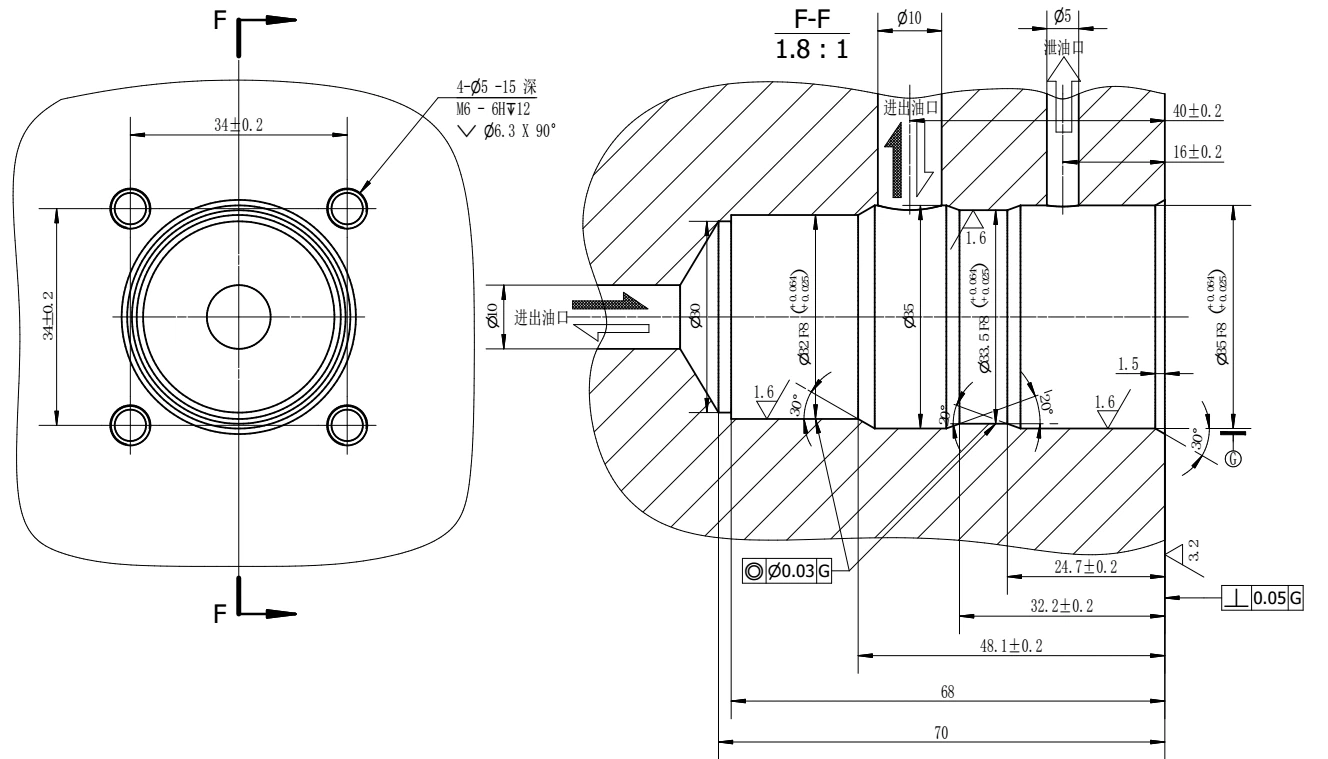
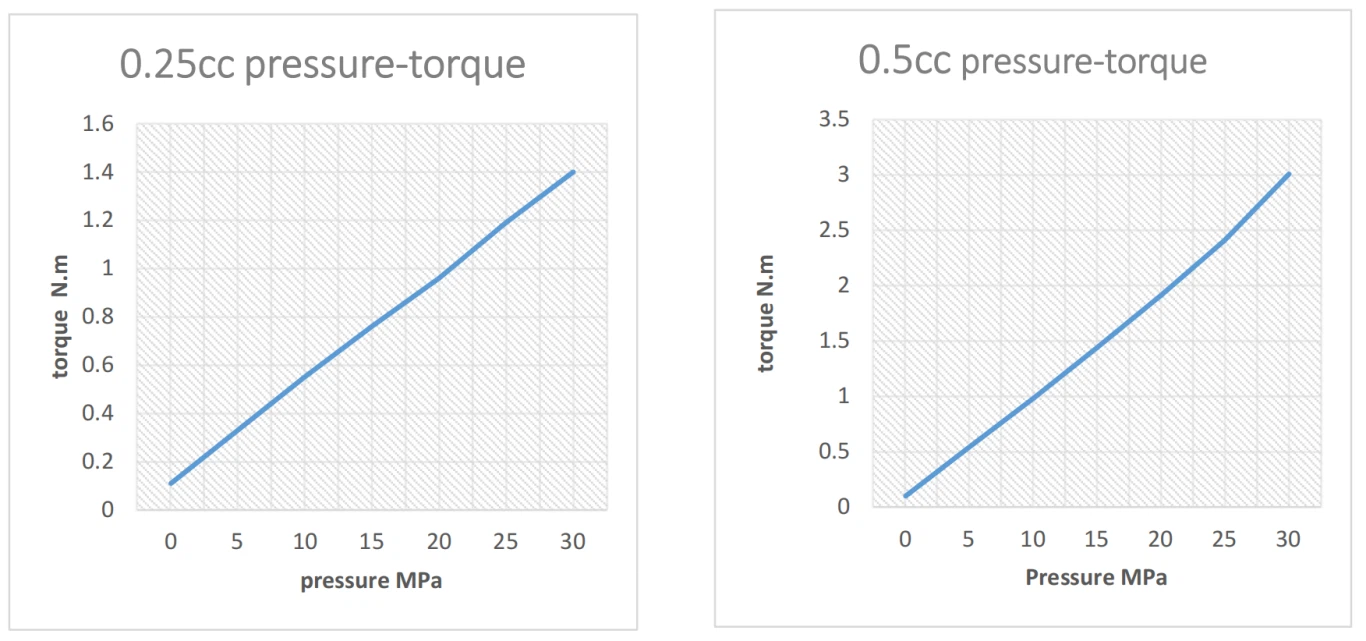
2 Cartridge piston pump 0.25cc/0.5cc
Cavity:
Flow curve

Pressure-Torque
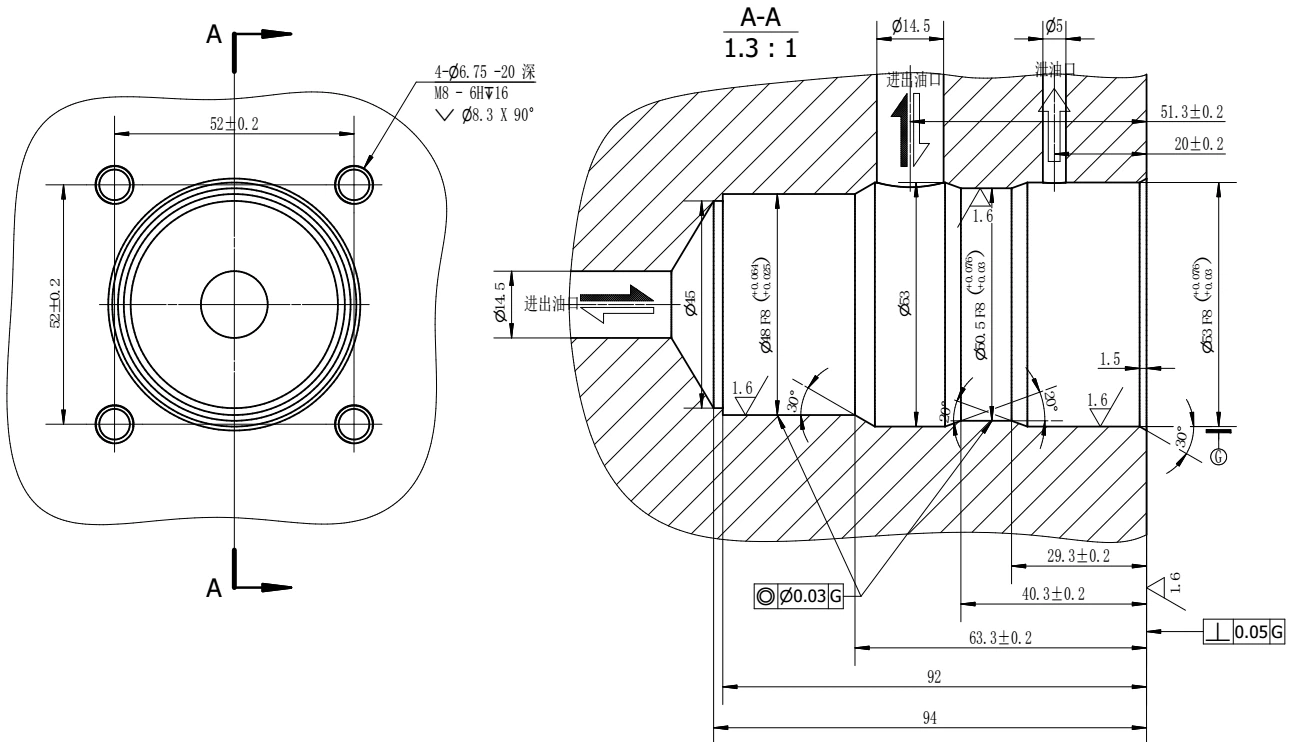
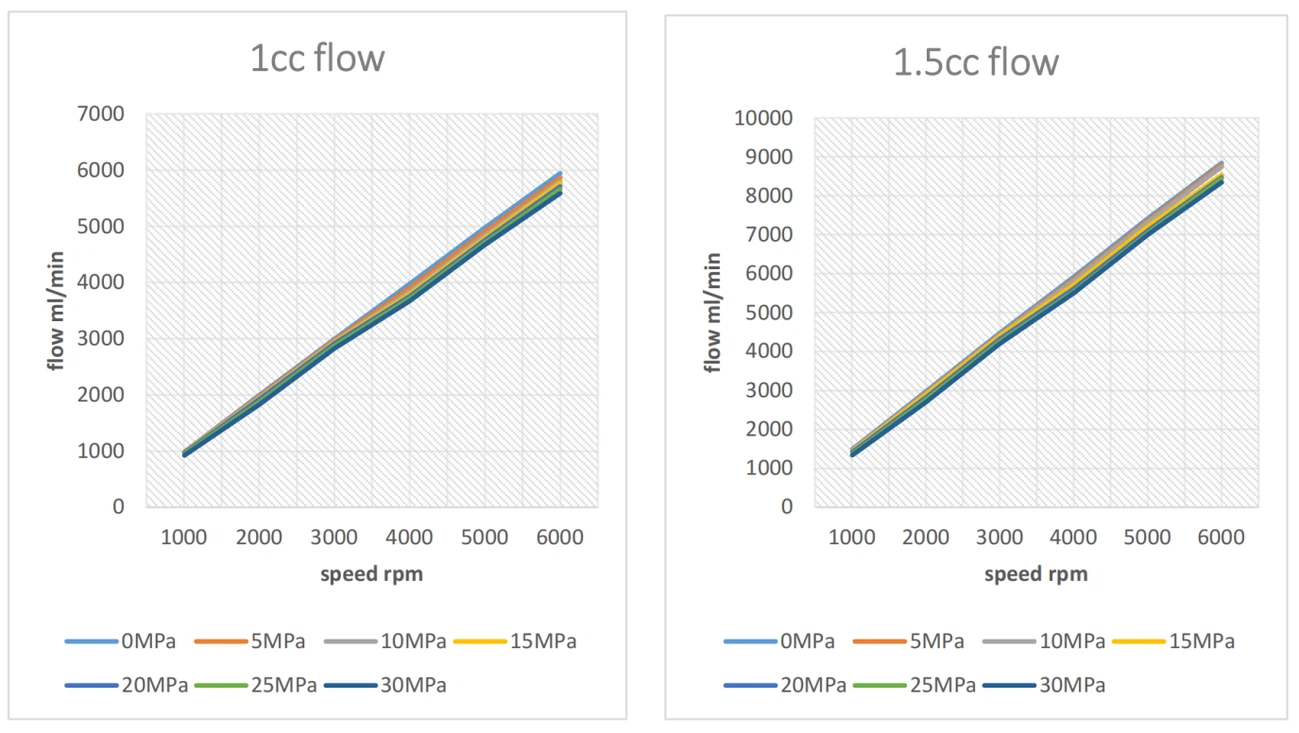
3 Cartridge piston pump 1cc/1.5cc/1.7cc

Cartridge:
Flow Curve
Pressure- Torque
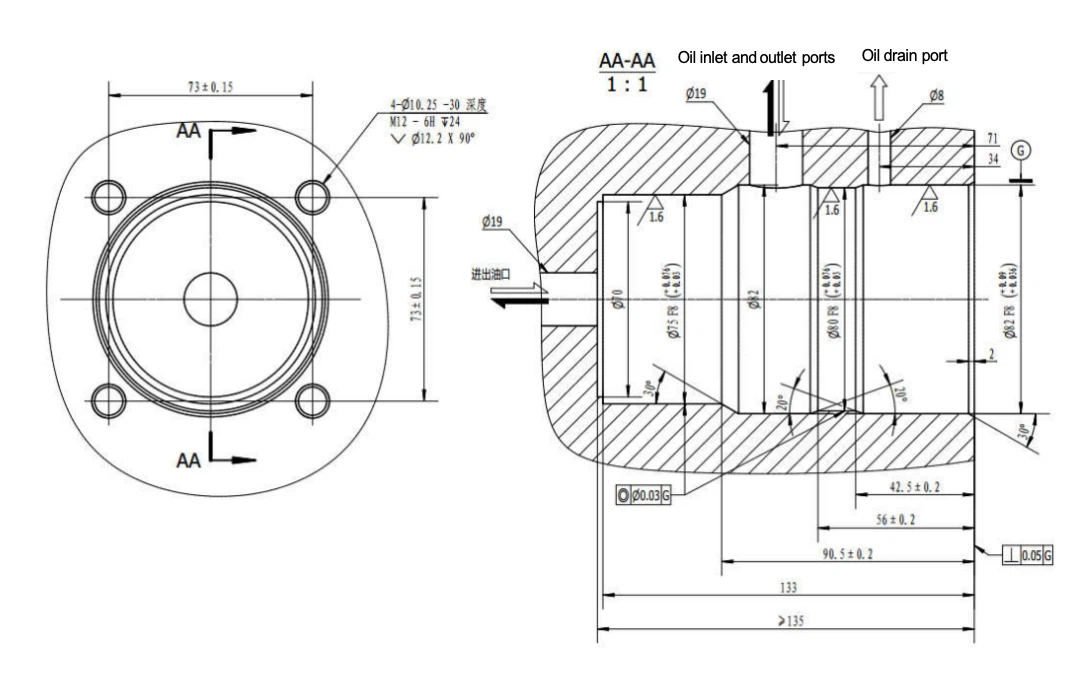
4 Cartridge piston pump 3, 5, 7cc

Cavity
Flow curve
Torque curve
why choose our Cartridge Piston Pump
1. Compact & Lightweight, Easy Integration
Our mini cartridge piston pump features an optimized compact structure, with a small volume and light weight, which can be easily integrated into space-constrained equipment or highly integrated hydraulic systems. Compared with traditional pumps, it greatly saves installation space, reduces the overall weight of the equipment, and is more suitable for small machinery, precision instruments and portable equipment that require miniaturization and light weight.
2. High Precision & Stable Performance
Equipped with a patented structural design, the pump achieves high-precision pressure and flow control, with stable output and small fluctuation, which can meet the strict requirements of precision hydraulic systems. Its high volumetric efficiency reduces hydraulic energy loss, ensuring stable operation even in complex working conditions such as high speed, high vibration and extreme temperature, effectively guaranteeing the reliability of your equipment.
3. Strong Adaptability & Wide Application
Our mini cartridge piston pump is designed to adapt to various harsh working environments, with excellent wear resistance, corrosion resistance and high-low temperature resistance. It is widely applicable to aerospace, scientific research, military, high-speed railway, small construction machinery, medical equipment and other fields, providing stable and reliable hydraulic power for different scenarios.
4. Easy Maintenance & Long Service Life
The core components are made of high-quality wear-resistant and corrosion-resistant materials, with a simple and easy-to-disassemble structure. Daily maintenance does not require complex tools, which greatly reduces maintenance costs and labor intensity. At the same time, the optimized structural design extends the service life of the pump, bringing long-term and stable use value to you.
5. Energy-Saving & Cost-Effective
Adopting advanced hydraulic control technology, the pump effectively reduces energy consumption while ensuring stable output, conforming to the global energy-saving and environmental protection trend. Its high performance-to-price ratio, combined with long service life and low maintenance costs, helps you reduce overall operating costs and improve market competitiveness.
Working Principle of Cartridge Piston Pump
The mini cartridge piston pump operates based on the core principle of converting mechanical energy into hydraulic energy through the reciprocating movement of pistons, which is optimized for its compact structure and miniaturized design to adapt to small-space and high-precision hydraulic system requirements. Its working process is mainly divided into two stages: suction and discharge, with the whole cycle driven by the rotation of the pump shaft, ensuring continuous and stable output of hydraulic pressure and flow.
Firstly, the structural basis of the mini cartridge piston pump is a compact cartridge-type design, where the piston, cylinder block, valve plate, and other core components are integrated into a small cartridge assembly, which can be directly installed in the manifold block to save space. When the pump is started, the drive shaft drives the cylinder block to rotate at a constant speed, and the pistons installed in the cylinder block perform reciprocating linear movement under the action of the swash plate or cam.
In the suction stage, as the cylinder block rotates, the angle of the swash plate (or the contour of the cam) causes the piston to move outward, forming a negative pressure inside the cylinder bore. At this time, the inlet valve opens under the action of atmospheric pressure, and the hydraulic oil in the oil tank is sucked into the cylinder bore, completing the suction process.
In the discharge stage, with the continuous rotation of the cylinder block, the piston moves inward under the push of the swash plate (or cam), compressing the hydraulic oil in the cylinder bore. When the pressure of the hydraulic oil exceeds the opening pressure of the outlet valve, the outlet valve opens, and the high-pressure hydraulic oil is discharged from the cylinder bore, entering the hydraulic system to provide power for the actuators.
The key to the stable operation of the mini cartridge piston pump lies in the precise coordination between the piston, cylinder block, valve plate, and swash plate. The optimized sealing structure between the components effectively prevents oil leakage, ensuring high volumetric efficiency. Meanwhile, the miniaturized design of the components does not affect the working efficiency; on the contrary, the compact structure reduces the internal flow resistance, further improving the response speed and stability of the pump, making it suitable for occasions requiring rapid and precise hydraulic control.
FAQ of Cartridge Piston Pump
1. What is the main difference between a cartridge piston pump and a traditional piston pump?
The core difference lies in the integrated cartridge design. A cartridge piston pump integrates key components (piston, cylinder block, valve plate, etc.) into a compact cartridge assembly, which can be directly installed in a manifold block. Compared with traditional piston pumps, it occupies less space, is easier to integrate into highly integrated hydraulic systems, and is more convenient for disassembly, maintenance and replacement. In addition, the miniaturized cartridge design can better adapt to space-constrained scenarios such as small equipment and precision instruments.
2. What should I do if the cartridge piston pump has insufficient output pressure?
First, check whether the hydraulic oil level is sufficient and whether the oil quality meets the requirements (if the oil is deteriorated or mixed with impurities, it will affect the pressure output). Second, check the inlet and outlet valves for blockage or damage, and clean or replace the valves if necessary. Third, check the seal of the piston and cylinder block; if there is wear or leakage, replace the worn components. Finally, check whether the drive speed meets the rated requirements, as insufficient speed will also lead to insufficient output pressure.
3. Can the cartridge piston pump be customized according to specific needs?
Yes. We can provide customized services according to your specific working conditions and requirements, including adjusting the pump size, pressure range, flow rate, material (wear-resistant, corrosion-resistant, etc.), and adapting to special working environments (such as extreme temperature, high corrosion). You only need to provide detailed technical parameters and application scenarios, and we will design a suitable cartridge piston pump solution for you.
4. What is the service life of the cartridge piston pump, and how to extend it?
Under normal use and regular maintenance, the service life of the cartridge piston pump is 3-5 years. To extend its service life, you need to: ① Use hydraulic oil that meets the specified standards and replace it regularly; ② Avoid operating the pump under overload (exceeding the rated pressure and flow); ③ Conduct regular maintenance and inspection to avoid component wear and damage; ④ Ensure that the installation and operation are correct, and avoid improper operation leading to component damage.
Hot Tags: cartridge piston pump, China cartridge piston pump manufacturers, suppliers, factory, Bidirectional Plunger Pump MPT, mp pistion pump, mini hydraulic piston pump, Cartridge Piston Pump, Small dimension piston pump, Mini Piston pump
Previous
No InformationSend Inquiry
