
Pressure curves that still overlap a year later - at 175 MPa and 200 °C.
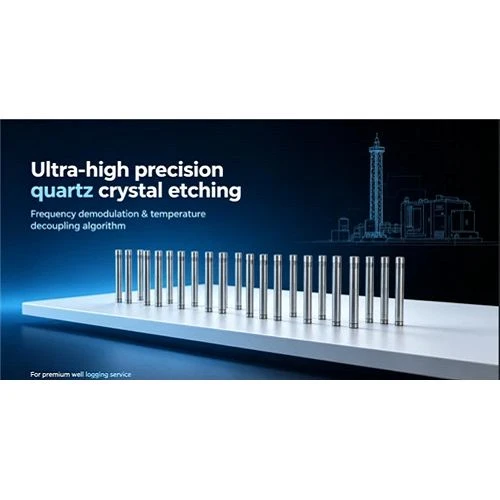
The deliverable in well testing is a pressure history, and it is judged on repeatability, not on a brochure's range column. We build quartz resonant sensing for gauges that must go down, sit for weeks, and come back to match.
Why this application is hard
Repeatability beats range.
A fracturing or interference test is judged on whether this month's 0.01% FS curve overlays last month's. Range is easy to buy; a frequency reference that does not walk is not.
Static dwell punishes drift.
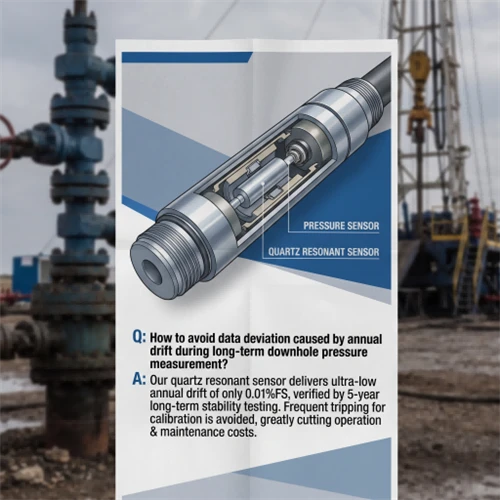
A memory gauge may sit at 175 MPa and 200 °C for weeks with no chance to re-zero. Quartz resonance holds a mechanical frequency reference where piezoresistive bridges walk with temperature and time.
It must fit the gauge carrier.
Envelope, thermal mass and sealing decide whether the sensor ever gets installed - a gauge that misses the carrier spec never gets to show its datasheet.
What we recommend
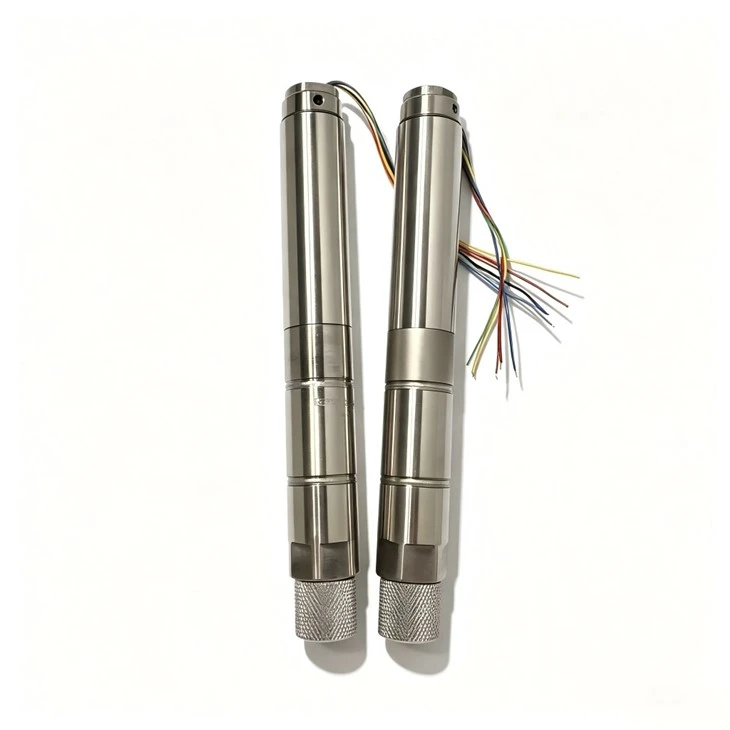
Repeatability 0.01% FS; accuracy 0.02% FS; resolution <100 Pa; up to 175 MPa; up to 200 ℃. The frequency output is inherently digital - no A/D error in the chain.

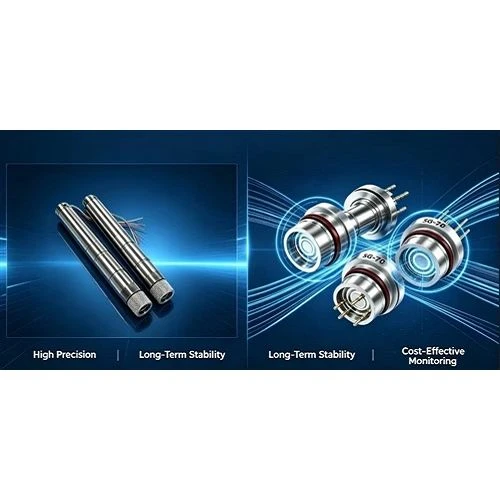
For runs where 0.1–0.5% FS class is acceptable and budget decides; same wide-temperature packaging discipline, same QA.
Tested
0.01% FS repeatability · 0.02% FS accuracy · <100 Pa resolution · 175 MPa static pressure · 200 ℃ operating
Related reading
FAQ
Tell us the job - depth, bottom-hole temperature, run duration, carrier envelope - and we will tell you quartz or piezoresistive, honestly.
Q1: Quartz or piezoresistive for my job?
Two questions decide it: how long the gauge stays down without re-zeroing, and whether the deliverable is comparative (curve overlay) or absolute. Both point to stability, quartz; budget and shorter runs, wide-temp piezoresistive.
Q2: What does <100 Pa resolution buy at 100 MPa?
Early-time buildup signatures and the first signs of boundary effects, which are exactly what well-test analysis pays for.
Q3: Do you provide per-job calibration?
Yes; every sensor ships with a full-temperature calibration report traceable to your stated ranges.