
From −55 °C cold soak to 10,000 g gun launch - and it still points true.
Flight hardware is judged by its environmental qualification, not its bench accuracy. Our gyros, quartz flexure accelerometers and pressure sensors are built - and documented - to survive the envelope first.
Why it is hard
Storage is a spec.
−55~+125 ℃ soak before the first power-on; every thermal cycle is a potential bias shift for an uncompensated design.
Launch is a spec.
10,000 g / 10 ms non-powered and 1,000 g / 1 ms powered shocks are everyday numbers in this industry, not worst cases.
Grams are a spec.
Every gram of sensor is negotiated against payload. A 6×6×1.9 mm triaxial or a Φ25 mm quartz flexure changes what the platform can carry.
What we recommend

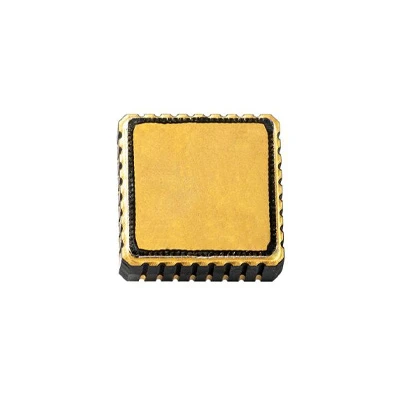
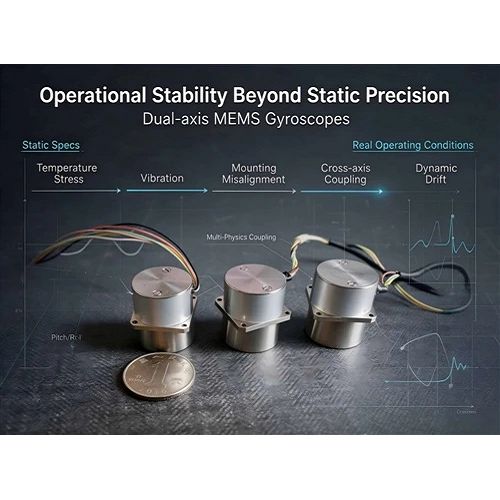
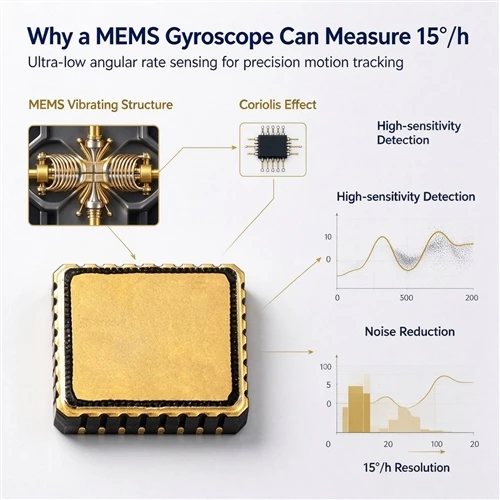
SG-H / SG-E MEMS gyroscopes - rotorless attitude sensing.
SG-H: bias ≤1 °/h @10 s. SG-E: ≤3 °/h @10 s at economical cost. Both: 10,000 g / 1,000 g shock ratings, −45~+85 ℃, 40 mA at 5 V.

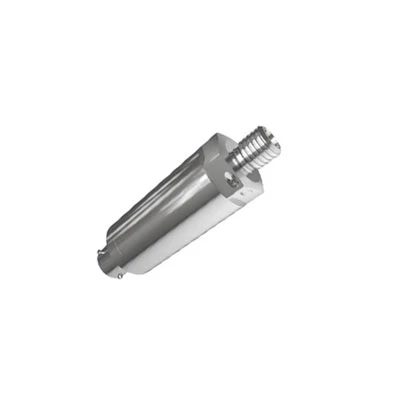
Air-data pressure: SG-P1 / SG-X33 / SG-R24 / SG-P45.
SG-P1 silicon resonant: ±0.01% FS composite accuracy across −55~+85 ℃, frequency output, 140 kPa–2 MPa ranges - for altitude and airspeed. SG-X33: full-temp ±2.0% FS, EMC per GJB151B. SG-R24: miniaturized atmospheric. SG-P45: ±0.1% FS, RS-485 / CAN.

SG-1 high-precision quartz flexure accelerometer - inertial-grade specific force.
The traditional choice where bias repeatability in the sub-200 µg class is required.

SG3-15 triaxial MEMS accelerometer - small is a capability.
6×6×1.9 mm LCC20 ceramic package; ±15 g; resolution 0.5 mg; bias stability ≤0.3 mg; 6,000 g shock; SPI digital output; 135 mW.
Tested
10,000 g / 10 ms non-powered shock · 1,000 g / 1 ms powered · −55~+125 ℃ storage · ±0.01% FS air-data accuracy · 6×6×1.9 mm triaxial footprint
Related reading
FAQ
Send the qualification envelope - temperature, shock, vibration, mass budget - and we will return the model plus its test documentation.
Q1: Do your parts carry formal qualification reports?
Every aerospace sensor ships with full-temperature calibration and test reports; DO-160 / GJB151B compliance is documented at series level (SG-X33, SG-R23).
Q2: Quartz flexure or MEMS for my IMU?
Quartz where sub-200 µg bias repeatability is required; MEMS where shock, size and cost dominate. We will tell you which side of the line your spec falls on.