
North-finding that survives 175 °C, 1,000 g shocks, and steel everywhere.
Downhole, the magnetic compass is unreliable and re-runs are unaffordable. We build the sensing core - gyro, accelerometers, pulser and power - that keeps azimuth, inclination and toolface honest from spud to TD.
What we put in the string

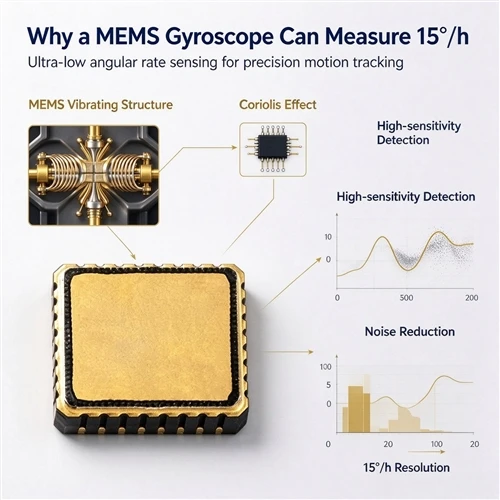
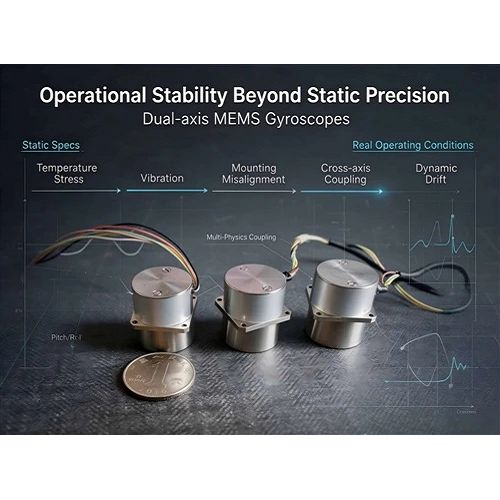
Bias stability ≤1 °/h at 10 s smoothing (≤3 °/h at 1 s); 1,000 g powered shock, 10,000 g non-powered; −45~+85 ℃; 24-bit digital output at 12 kHz. No spinning rotor - no bearing wear under sustained vibration.

±30 g range; resolution 30 µg; bias repeatability <200 µg; Φ18.2×16 mm, 25 g - sized for Φ35/Φ48 collars; −40~+180 ℃; current output immune to downhole EMI.

±30 g; bias repeatability <50 µg (SG-4-01); −55~+180 ℃; 1,000 g / 0.5 ms shock; Φ25 mm, <65 g.
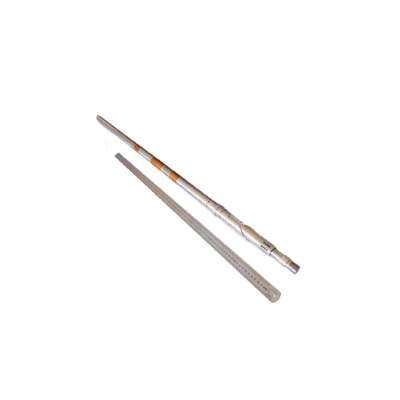
Rated 120 MPa and −25~+150 ℃; flow window 10–65 L/s; maintenance interval extended from 600 to 800–1,000 h; single-battery life from 160 to 260 h; direct swap for QDT / YST-48R generators.
High-temperature Li-SOCl₂ batteries (SG32615 / SG26100) and vacuum dewar housings complete the string.
Tested
1,000 g / 1 ms shock (powered) · 10,000 g / 10 ms (non-powered) · 18 g rms vibration, 20–2000 Hz · ≤1 °/h bias stability @ 10 s · −45~+85 ℃ operating
Related reading

FAQ
Send five lines - temperature, pressure, shock, envelope size, run duration - and an applications engineer will map them to a model within one working day.
Q1: Can the SG-H replace a fiber-optic gyro in my tool?
Where bias ≤1 °/h @10 s and 40 mA power meet the survey spec, yes, and it removes the bearing-wear failure mode. Where the spec demands <0.1 °/h, fiber remains the right answer and we will say so.
Q2: Is the SG-48 compatible with my existing MWD?
Dimensionally and electrically interchangeable with QDT and YST-48R positive-pulse generators; no re-wiring.
Q3: Do you support small-diameter collars?
The SG-6 format (Φ18.2×16 mm, 25 g) was designed for Φ35-class tools; custom housings are a standard request.