
As a key device capable of isolating carrier motion interference and providing a stable attitude reference for loads, stabilized platforms are widely used in various core fields such as aerospace, military equipment, civil electronics, and industrial testing. Their performance directly determines the working accuracy and reliability of load devices. As the core inertial sensing component of stabilized platforms, dual-axis MEMS (Micro-Electro-Mechanical Systems) gyroscopes, with their unique advantages of small size, light weight, low power consumption, controllable cost, and rapid response, have gradually replaced traditional mechanical gyroscopes and laser gyroscopes, becoming the core support for modern stabilized platforms to achieve high-precision attitude control. Their role runs through the entire process of disturbance detection, attitude feedback, and precise compensation of stabilized platforms, and they are the key core to ensuring the stable operation of stabilized platforms and improving system performance.
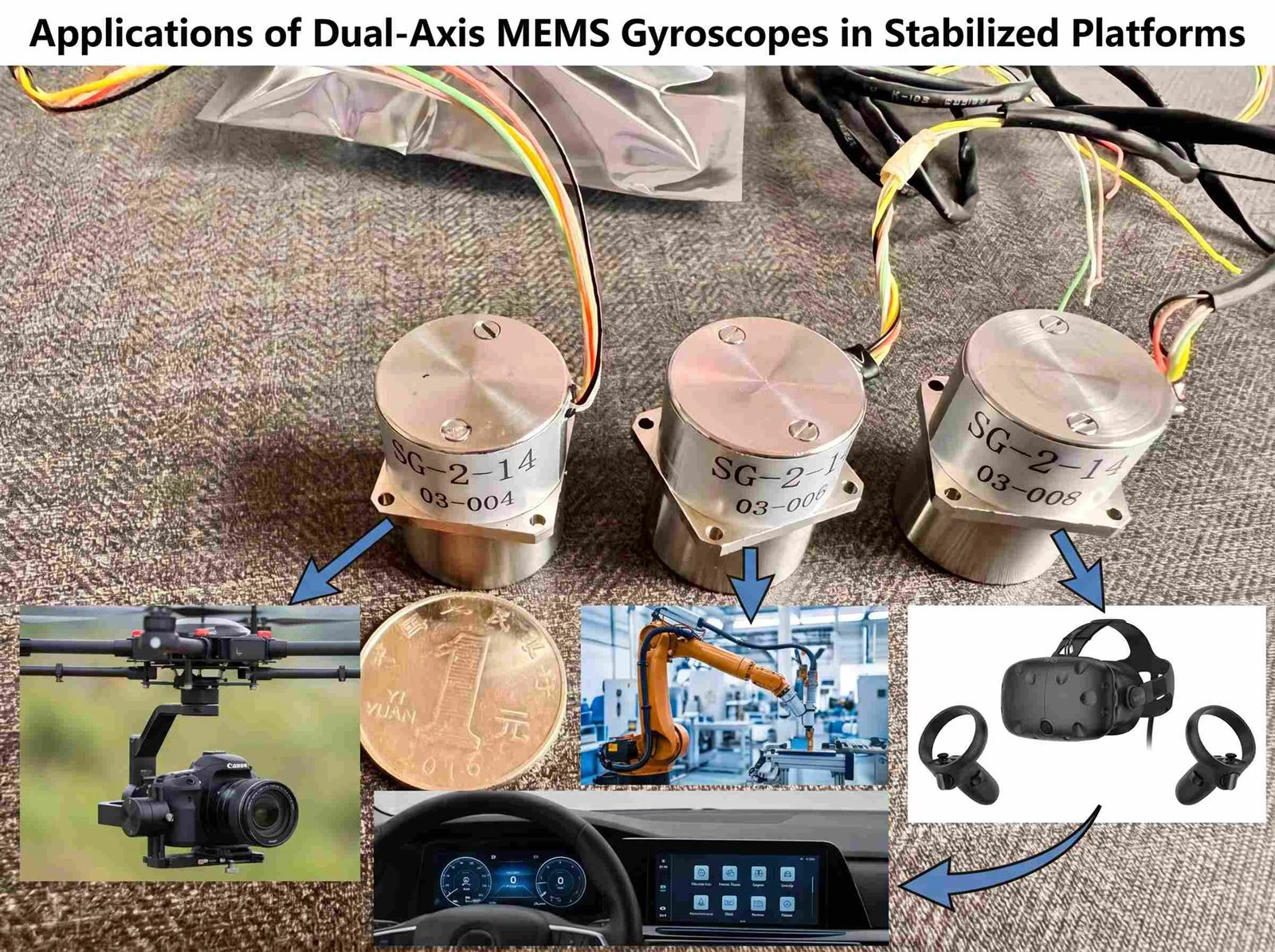
The core function of dual-axis MEMS gyroscopes is to detect the dual-axis angular velocity changes of stabilized platforms in real time and accurately, providing reliable raw data support for platform attitude control, which is also the basic premise for stabilized platforms to achieve the "attitude stabilization" function. The core demand of stabilized platforms is to isolate the attitude disturbance of the carrier (such as aircraft, vehicles, ships, satellites, etc.), so that the load (such as optical cameras, radars, weapon launchers, detection instruments, etc.) always maintains a stable spatial attitude or pointing. Based on the Coriolis force effect, dual-axis MEMS gyroscopes, through vibrating structures fabricated on silicon wafers by microfabrication technology, can sensitively capture the angular velocity changes of the platform around two orthogonal sensitive axes, convert mechanical rotation signals into detectable electrical signals, and output attitude change parameters such as pitch and roll of the platform in real time. With fast response speed and high sensitivity, they can capture tiny attitude disturbances, providing accurate and timely feedback information for subsequent compensation control, and solving the pain points of traditional gyroscopes such as slow response and inability to capture subtle disturbances.
In the attitude closed-loop control, dual-axis MEMS gyroscopes play the core role of "attitude monitoring and feedback", which is a key link for stabilized platforms to achieve dynamic compensation and maintain attitude stability. The working mechanism of a stabilized platform is to detect carrier disturbance, drive the actuator to produce reverse motion, and offset the attitude deviation caused by the disturbance. The realization of this process completely relies on the real-time feedback of dual-axis MEMS gyroscopes. When the carrier undergoes attitude changes (such as ships swaying in ocean waves, aircraft bumping during flight, tanks jolting during travel), the dual-axis MEMS gyroscope will immediately detect the corresponding angular velocity changes, transmit the signal to the platform controller. The controller calculates the attitude deviation based on the accurate data output by the gyroscope, and then drives the actuator such as a servo motor to control the inner and outer frames of the stabilized platform to produce motion opposite to the disturbance direction and equal in magnitude, realizing attitude compensation and ensuring that the load remains stable at all times. For example, in the dual-axis stabilized platform of an airborne electro-optical pod, dual-axis MEMS gyroscopes are installed on the inner ring (pitch ring) and outer ring (azimuth ring) respectively to detect the rotational angular velocity of the two rings in real time. The controller drives the motor to adjust according to the feedback signal, isolates the vibration of the carrier aircraft, ensures that the electro-optical load can stably track the target, and avoids the decrease in detection accuracy caused by carrier disturbance.
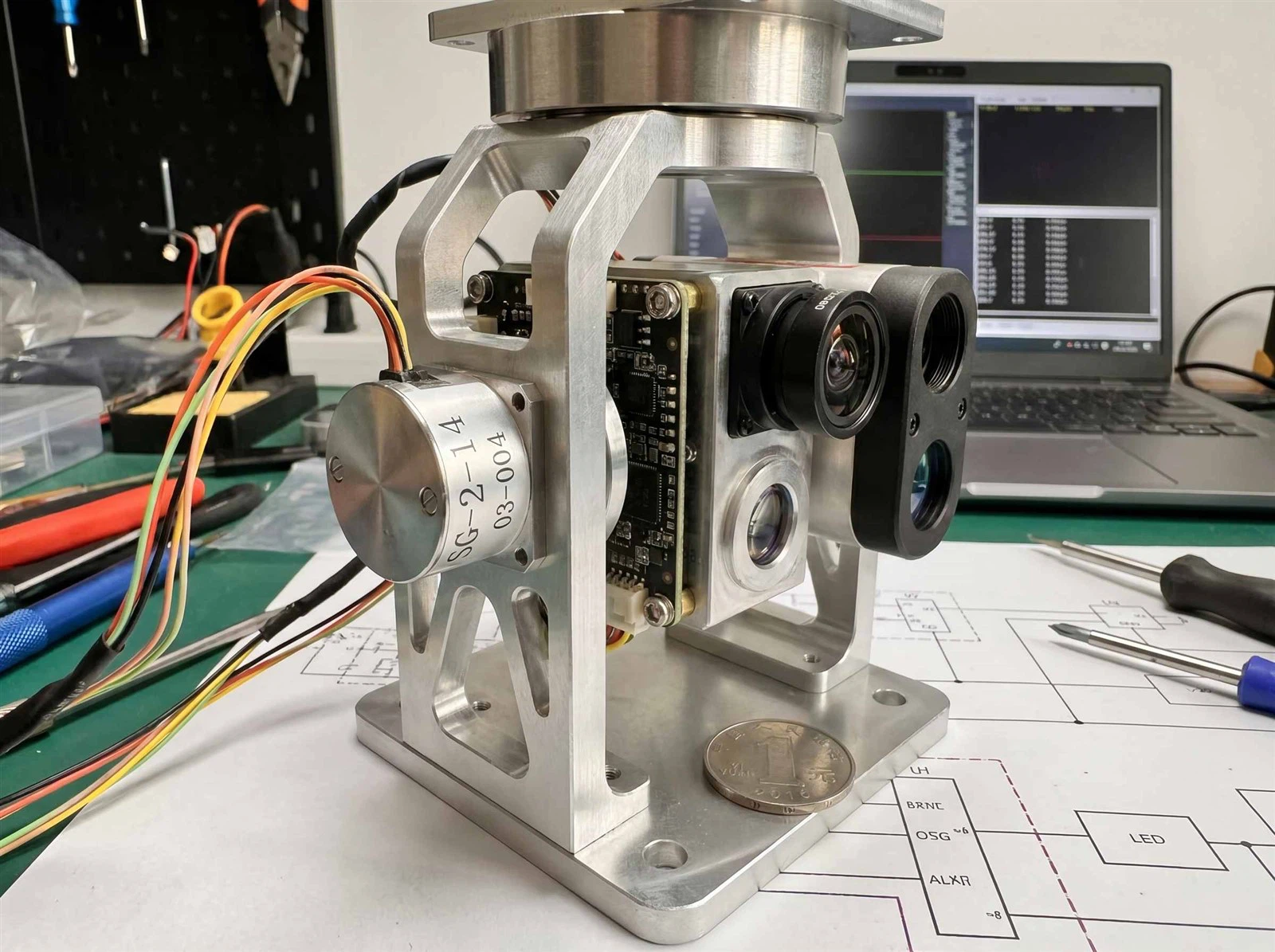
The miniaturization and low power consumption characteristics of dual-axis MEMS gyroscopes have promoted the miniaturization and lightweight development of stabilized platforms and expanded their application scenarios, which is one of their core advantages compared with traditional gyroscopes. Traditional mechanical gyroscopes and laser gyroscopes are large in size, heavy in weight, and high in power consumption, making them difficult to apply to miniaturized and portable stabilized platforms. In contrast, dual-axis MEMS gyroscopes can be integrated on tiny chips, with a size of only a few millimeters, a weight as light as tens of grams, and a power consumption of only a few milliwatts to tens of milliwatts. They can be flexibly installed in limited space without occupying a lot of additional carrier space or increasing the overall load of the platform, effectively promoting the upgrading of stabilized platforms towards miniaturization and lightweight. This advantage has enabled their wide application in scenarios such as small UAV aerial gimbals, portable geological exploration stabilized platforms, and small shipborne radar stabilization systems. For example, in UAV aerial photography, dual-axis MEMS gyroscopes are integrated into the gimbal stabilization system to detect the attitude jitter of the UAV in real time, quickly drive the gimbal to compensate, and ensure clear and stable shooting images; in portable geological exploration equipment, the stabilized platform supported by dual-axis MEMS gyroscopes can isolate equipment shaking in complex terrain and improve the accuracy of exploration data collection.
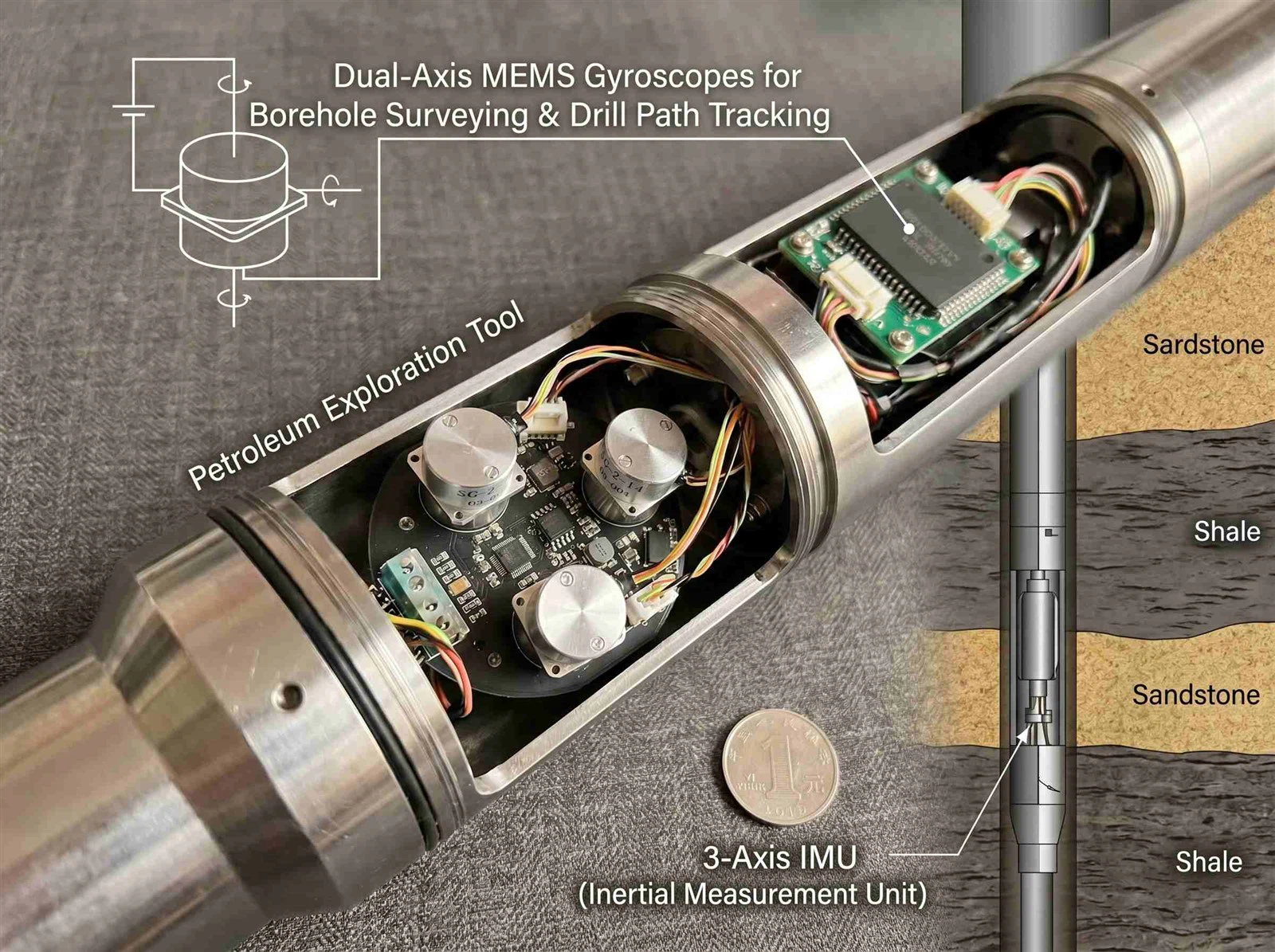
In stabilized platforms in different fields, the important role of dual-axis MEMS gyroscopes presents targeted value and becomes the "core guarantee" for the normal operation of stabilized platforms in various fields. In the aerospace field, the dual-axis stabilized platform of satellites relies on dual-axis MEMS gyroscopes to detect the attitude changes of satellites caused by space interference such as solar radiation pressure and uneven Earth's gravitational field in real time, ensuring the stable operation of satellite payloads (such as optical cameras and communication antennas) through compensation control, and guaranteeing the accuracy of Earth observation and satellite communication. In the civil field, in the maritime search and rescue stabilized platform, dual-axis MEMS gyroscopes can keep the mounted 360-degree spherical camera stable, ensuring that marine targets can be clearly captured during the search and rescue process and improving search and rescue efficiency. In the industrial field, in the end effector stabilized platform of industrial robots, dual-axis MEMS gyroscopes detect joint attitude changes in real time, ensuring stable movement and precise path of the robotic arm, and improving production and assembly accuracy.
In addition, the low-cost and easy mass production characteristics of dual-axis MEMS gyroscopes have reduced the manufacturing cost of stabilized platforms and promoted their large-scale application. Compared with traditional laser gyroscopes and fiber optic gyroscopes, dual-axis MEMS gyroscopes adopt micro-electro-mechanical processing technology, which can realize mass production, greatly reducing the cost of a single device. This enables stabilized platforms to be widely used in fields sensitive to cost such as consumer electronics and civil testing, breaking the limitation that traditional high-precision stabilized platforms are expensive and difficult to popularize. At the same time, through technical optimizations such as temperature compensation and noise suppression, the accuracy of dual-axis MEMS gyroscopes has been continuously improved, which can meet the high-precision requirements of stabilized platforms for tactical weapon systems and high-precision detection equipment, further expanding their application scope.
In summary, dual-axis MEMS gyroscopes play the core roles of attitude detection, real-time feedback, and precise compensation in stabilized platforms. They not only provide reliable inertial sensing support for stabilized platforms, ensuring the working accuracy and stability of load devices, but also their advantages of miniaturization, low power consumption, and low cost promote the technological upgrading and application expansion of stabilized platforms. Whether in high-end fields such as aerospace and military equipment, or in ordinary fields such as civil electronics and industrial testing, dual-axis MEMS gyroscopes are indispensable core components of stabilized platforms. The improvement of their performance directly drives the optimization of the overall performance of stabilized platforms, providing important support for the technological development of various fields.