
In petroleum exploitation, oil and gas gathering and transportation, on-site sampling, downhole auxiliary operations, and offshore platform production, special insulation containers are mainly applied for constant-temperature storage of oil and gas media, process fluid anti-coagulation, sampled medium heat preservation, and equipment thermal insulation protection. Different from civil insulation equipment, petroleum field working conditions are extremely harsh, featuring sudden temperature changes, pressure fluctuations, salt spray adhesion, and corrosion caused by chloride ions, hydrogen sulfide, and crude oil organic acids. These rigorous conditions impose high requirements on the environmental adaptability, structural strength, service life, and operation and maintenance costs of insulation containers.
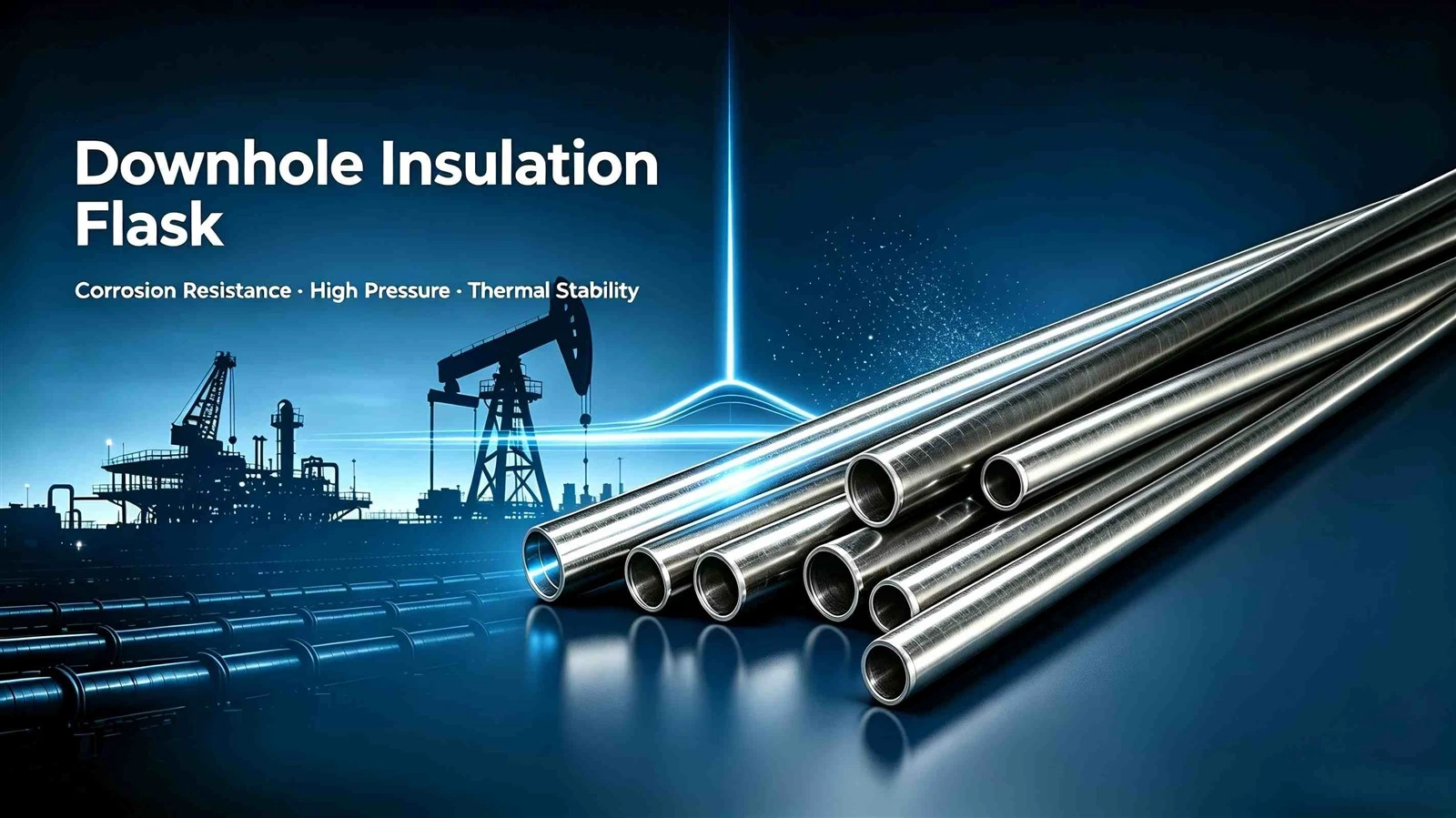
At present, 316 stainless steel, 17-4PH precipitation hardening stainless steel, and titanium alloy are the three mainstream materials for petroleum insulation cavities and sampling insulation devices. This paper compares the three materials from the dimensions of environmental adaptability, structural performance, and full-cycle cost, providing practical selection references for oilfield equipment procurement and process supporting.
1. Working Condition and Environmental Adaptability of Each Material
Corrosion resistance and working condition adaptability are the core criteria for petroleum equipment material selection, and material stability directly determines equipment service life and on-site operation safety.

316 stainless steel boasts the strongest universality for onshore oilfields. With molybdenum added, it exhibits excellent resistance to pitting corrosion and crevice corrosion, stably adapting to oil-water mixed media, process clean water and mild salt spray environments in conventional onshore oilfields. It features excellent high and low temperature toughness without cold brittleness, and is not prone to deformation, scaling or corrosion under frequent temperature and pressure fluctuations. With superior vacuum forming and welding performance and stable cavity tightness, it is widely used in conventional working conditions such as ground gathering and transportation, on-site sampling, and station constant temperature insulation. However, it has limited resistance to extreme corrosion. In environments with high-concentration chloride seawater, high-content hydrogen sulfide and deep-sea strong salt spray, its passivation film is vulnerable to damage, resulting in pitting corrosion and leakage, making it unsuitable for long-term service in offshore and highly corrosive blocks.
17-4PH precipitation hardening stainless steel is featured with ultra-high mechanical strength. After aging treatment, its tensile strength is much higher than that of 316 stainless steel, with outstanding resistance to high pressure, deformation and vibration fatigue. It is suitable for downhole working conditions with high pressure, high load and frequent pressure impact, and can effectively solve deformation, loosening and fatigue cracking of high-pressure insulation cavities and pressure-bearing accessories. Nevertheless, it has weak corrosion resistance, which is close to 304 stainless steel and far inferior to 316 stainless steel. It is prone to stress corrosion and cracking in chlorine-containing, sulfur-containing and humid salt spray environments. It is only applicable to high-pressure load-bearing structures under low-corrosion and dry working conditions, and is strictly prohibited for offshore platforms and high-sulfur oilfields.
Titanium alloy is the optimal material for extreme corrosive working conditions. A dense self-repairing passivation film can be formed on its surface, enabling long-term resistance to seawater immersion, high-density salt spray, hydrogen sulfide, carbon dioxide acidic media and alternating high and low temperature working conditions with almost no risk of corrosion or leakage. Meanwhile, titanium alloy weighs only 50% of stainless steel, with obvious lightweight advantages and high specific strength, which can effectively reduce the load of offshore platform equipment and is suitable for high-end sampling insulation devices and mobile precision insulation equipment. Its only disadvantage is the relatively soft texture with poor impact and wear resistance, making it inapplicable to harsh working conditions with strong impact.
2. Full-cycle Service Cost Comparison
Material selection for oilfields should not only focus on the unit procurement price, but comprehensively evaluate raw material cost, processing cost, operation and maintenance cost, replacement cost and shutdown loss.

316 stainless steel has sufficient market supply and moderate unit price. Its thin-wall forming, welding and solution annealing processes are mature, which adapt to the precision double-layer vacuum structure of insulation containers, with high processing yield and low mass production cost. Under conventional onshore working conditions, its service life can reach 8–10 years with low failure rate and zero daily maintenance, avoiding frequent replacement and shutdown loss. It delivers the best full-cycle cost performance and is suitable for large-scale standardized supporting applications in oilfields.
17-4PH stainless steel has a raw material price close to 316 stainless steel, but its overall processing cost is much higher. It features high hardness and difficult cutting, with easy rebound during thin-wall forming. Its strength and corrosion resistance decline significantly after welding, requiring secondary aging heat treatment, which leads to complex technological processes and long production cycles. In addition, due to poor corrosion resistance, it ages and fails easily under ordinary working conditions with frequent maintenance. It is only suitable for small-batch special high-pressure structural supporting and cannot be universally applied.
Titanium alloy requires the highest initial investment. Its raw material cost is 5–8 times that of 316 stainless steel, with high requirements for forming and welding (full inert gas protection is mandatory), resulting in high process threshold, low yield and far higher finished product cost than stainless steel. However, it shows prominent advantages in extreme working conditions such as offshore, high-salt and high-sulfur environments. With a service life of more than 15 years and long-term maintenance-free operation, it can greatly reduce equipment replacement, maintenance shutdown and anti-corrosion maintenance costs, delivering better full-cycle economic benefits for high-end core offshore oil and gas equipment.
3. Conclusion and Material Selection Suggestions

There is no absolutely optimal material for petroleum insulation containers, and the selection should be matched with actual working conditions. 316 stainless steel has balanced comprehensive performance and high cost performance, suitable for most conventional onshore oilfields, ground gathering and transportation, and sampling insulation scenarios. 17-4PH stainless steel features high strength and fatigue resistance, only applicable to special high-pressure and high-load bearing structures under low-corrosion conditions. Titanium alloy boasts top-tier corrosion resistance, specially designed for extreme working conditions of offshore platforms, deep sea and high-corrosion environments. Oilfield material selection shall follow the principles of "corrosion priority, strength adaptation and optimal full-cycle cost". Reasonable material matching based on on-site media, temperature and pressure conditions, and service life requirements can ensure safe and stable equipment operation while controlling the comprehensive engineering cost.